How AI and SEO are changing search (how smart brands are getting ahead)
Search is changing. Not in a "robots have taken over" kind of way. But quietly, steadily, and in ways that are starting to mess with your rankings.
And no, it's not just because Google hit the big red update button again. It's because artificial intelligence, particularly large language models like GPT and Gemini, are now helping search engines understand content more like a person would.
For marketers, that shift is a big deal. It's changing how your content gets read, ranked, and either rewarded… or completely ignored.
So let's break down what's actually going on, why it matters, and how brands can keep showing up in search without panicking or publishing 37 new blog posts by Friday.
AI is reshaping search - here's what you need to know
TL;DR:
- AI-powered search engines now understand content context and quality like humans do, not just keywords
- Poor content structure and thin information will hurt your rankings and lead generation
- Clear structure, topic clusters, and depth matter more than word count or keyword density
- Update existing content to meet new standards rather than just creating more posts
- Use AI as a tool to assist, but your expertise and voice are what make content rank
What's different about AI-powered search?
Back in the day, search was mostly mechanical. Get your keywords in the right places, build a few backlinks, make sure your site was crawlable, and you were in the game. Volume often beat value. But as Google's search algorithms have evolved, that playbook doesn't work the same way anymore.
Today's search engines, powered by large language models, are reading content differently. They don't just scan for words. They look at how ideas connect, how clearly the content is structured, and whether it actually helps someone solve a problem.
Here's what that looks like in action:
- They recognise broader topics and subtopics, not just isolated keywords
- They connect related concepts, like "carbon offsets" and "ESG reporting"
- They prioritise pages that are well-organised, easy to follow, and genuinely useful
In other words, search is starting to make sense of content the way people do. It's less about ticking technical boxes, and more about providing clarity and depth.
Why it matters for your content strategy
This isn't just a tech tweak. It's a shift that affects traffic, trust, and the kind of leads that actually convert. If your marketing strategy hasn't adapted to these changes, you're likely already feeling the impact.
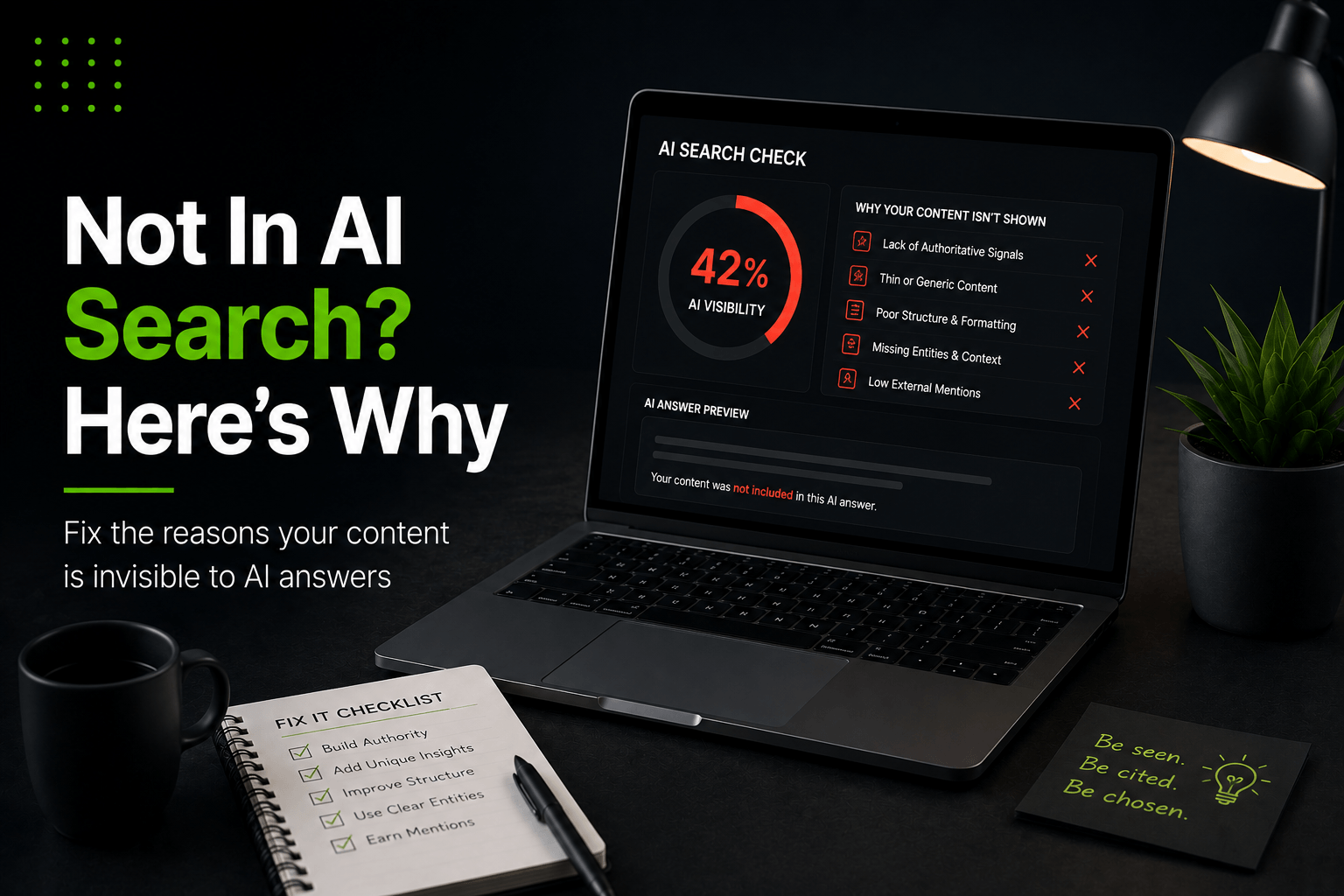
When your content is built in a way AI can't easily read and retrieve, it starts to slip - and so do your results.
Here's what that can look like:
You get seen less. If your content is vague, messy, or just too light, AI tools are less likely to serve it up. That means fewer clicks, fewer eyeballs, and fewer chances to win business.
Leads slow down. Organic traffic still punches above its weight when it comes to ROI. If it drops, you'll start feeling the pressure in your lead gen costs.
You lose trust. Thin content, keyword stuffing, regurgitated advice - AI can spot it, and so can your audience. If your content feels like it's phoning it in, people will scroll past.
The takeaway? It's not just about having something to say. It's about saying it clearly, helpfully, and in a way that actually makes someone want to stick around.
How to make your content AI (and human) friendly
This isn't about tossing your SEO strategy in the bin. The fundamentals still matter. What's changed is how search engines understand and prioritise them.
Here's how we're helping brands adapt without turning their content strategy upside down.
1. Make your content easy to follow
AI loves structure. So do your readers.
Use clear headings to show what's important. Start with an H1 for your main idea, break things down with H2s and H3s, and keep each section focused. If your paragraphs are too long, split them up. If your points start to ramble, tighten them.
Think of every page as a mini resource. The easier it is to scan, the easier it is to serve.
When your content flows well, it's not just more readable. It's also more likely to show up in search, because AI understands it better.
2. Build topic clusters that actually connect
AI doesn't just look at what a page says. It looks at how your content fits together.
That's where topic clusters come in. Start with one main page that covers a big theme - like "property marketing" - then create a handful of related pieces that explore specific angles, like audience targeting, campaign strategy, or platform choices. Link them together naturally. This approach works particularly well when paired with a well-structured website architecture that makes navigation intuitive.
This helps search engines understand that your site has depth, not just surface-level content. And it gives your readers a clearer path to follow, which keeps them on your site longer.
3. Go deep, not just long
More words don't always mean more value. What matters is whether your content actually answers the question someone came looking for. Quality content beats quantity every time.
If a visitor lands on your page, do they walk away with clarity? Or are they still left wondering?
Be specific. Break things down. Use examples. Show your process. The goal is to be the best, most useful answer on the internet for that topic — not just the longest one.
4. Don't forget your existing content
You might not need to write something new. Sometimes your biggest wins come from polishing what you've already got.
Look at older blogs or high-traffic pages and ask:
- Can the structure be improved?
- Are the stats or examples still current?
- Is the message clear and easy to follow?
- Is anything missing?
Tools like Surfer SEO or Semrush can help audit your content and spot what's lacking compared to pages that are already ranking well. Small updates can lead to big gains.
5. Let AI be your sidekick, not your spokesperson
We use AI at Ziff too. It's handy, fast, and a solid assistant. But it's not the brains of the operation - that's still you. Our generative AI services help businesses leverage AI effectively while maintaining their unique voice.
Use it to:
- Speed up your research
- Sketch out a rough outline
- Catch technical gaps you might miss
Just don't hand it the mic. Your voice, your insights, your experience - that's what gives content its punch. AI can help shape the message, but it can't replace the thinking behind it.
Think of it like a sous-chef. Helpful in the kitchen, but you're still the one writing the recipe.
So what now that the robots can actually read (i.e, make sense of) your content?
Well… they're reading everything. Your blogs. Your service pages. Your formatting quirks. And they're not just skimming - they're deciding whether your content's actually helpful or just pretending to be.
So if your pages are rambling, messy, or built around stuffing keywords like it's 2009? They're getting skipped. And not just by bots. Real people can tell too.
The brands that will win aren't shouting louder or posting more. They're making sense. They're showing up with clarity, structure, and ideas worth ranking. The brands that will win are going beyond the noise.
AI didn't kill SEO. It just raised the bar.
Ready to adapt your content for AI-powered search?
If your traffic has plateaued or your content isn't performing like it used to, it's time to rethink your approach. At Ziff Digital, we help Australian businesses create content strategies that work with AI-powered search, not against it. Request a custom SEO strategy session today and let's make sure your content gets the visibility it deserves.
Thanks for reading - from the results-driven team at Ziff Digital.