The GEO Audit: How to Find Out If AI Search Engines Know Your Brand Exists
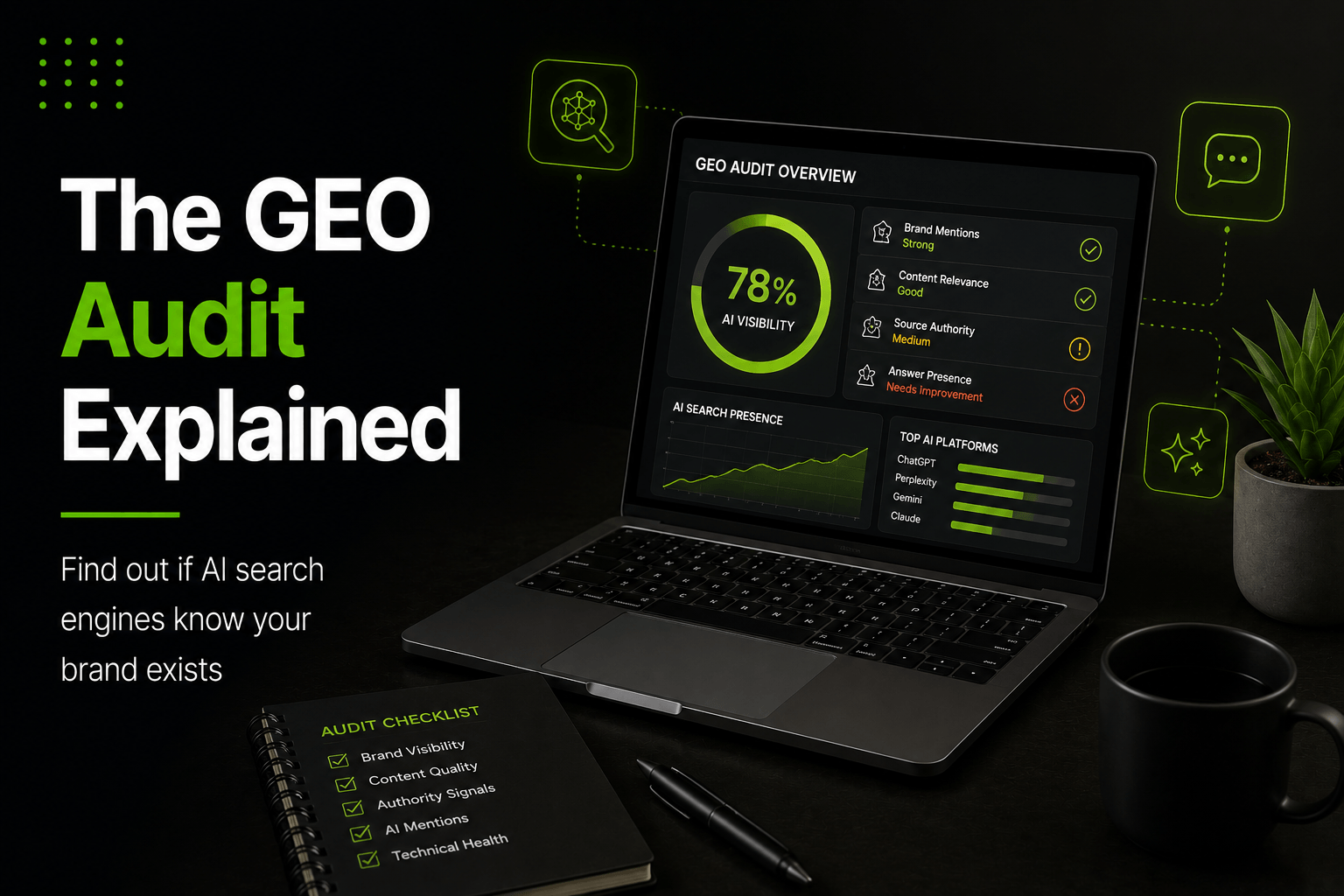
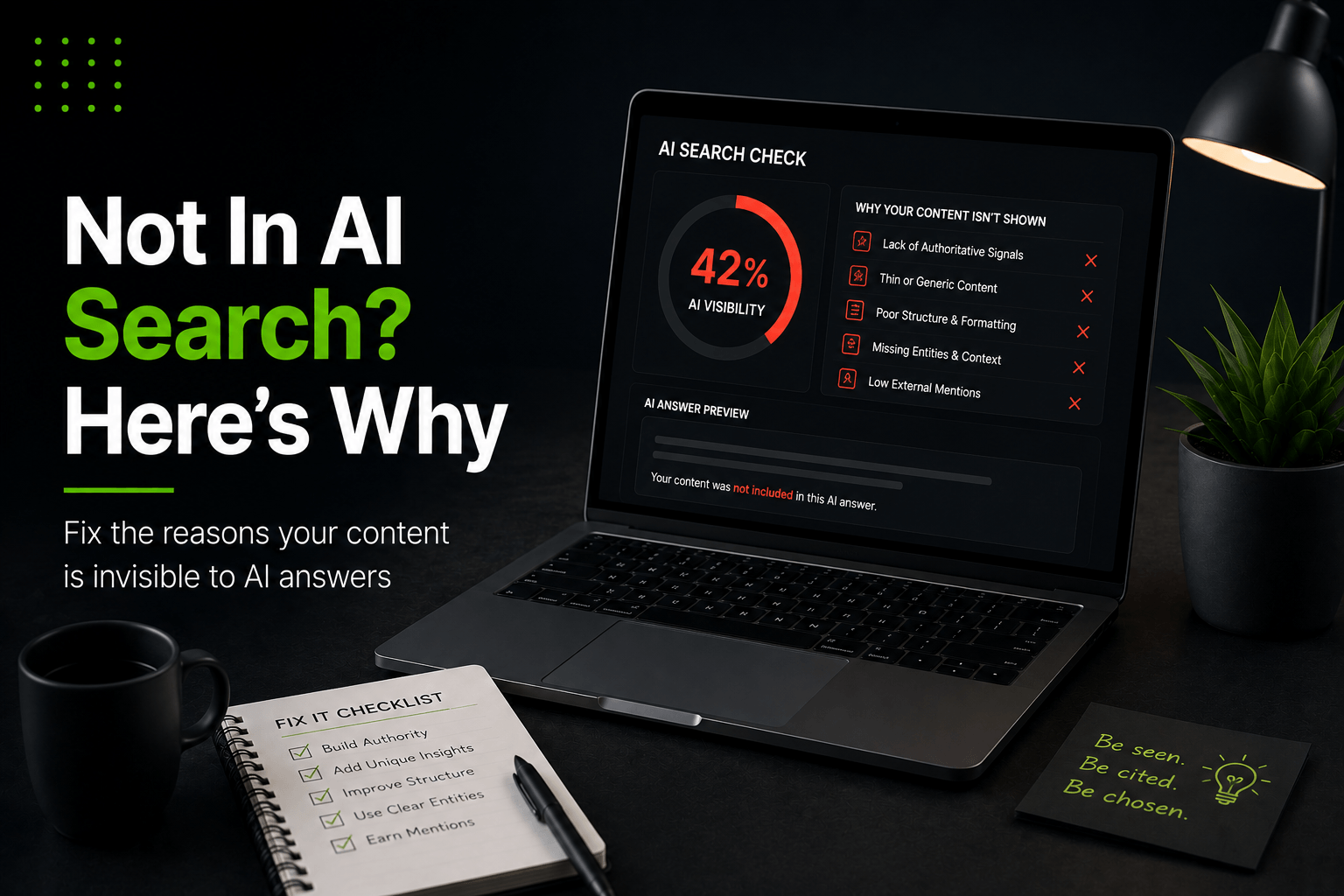
Most Australian businesses have no idea how they appear in AI search. They know their Google rankings. They track their website traffic. But they have never once opened ChatGPT and asked the questions their potential customers are asking every day.
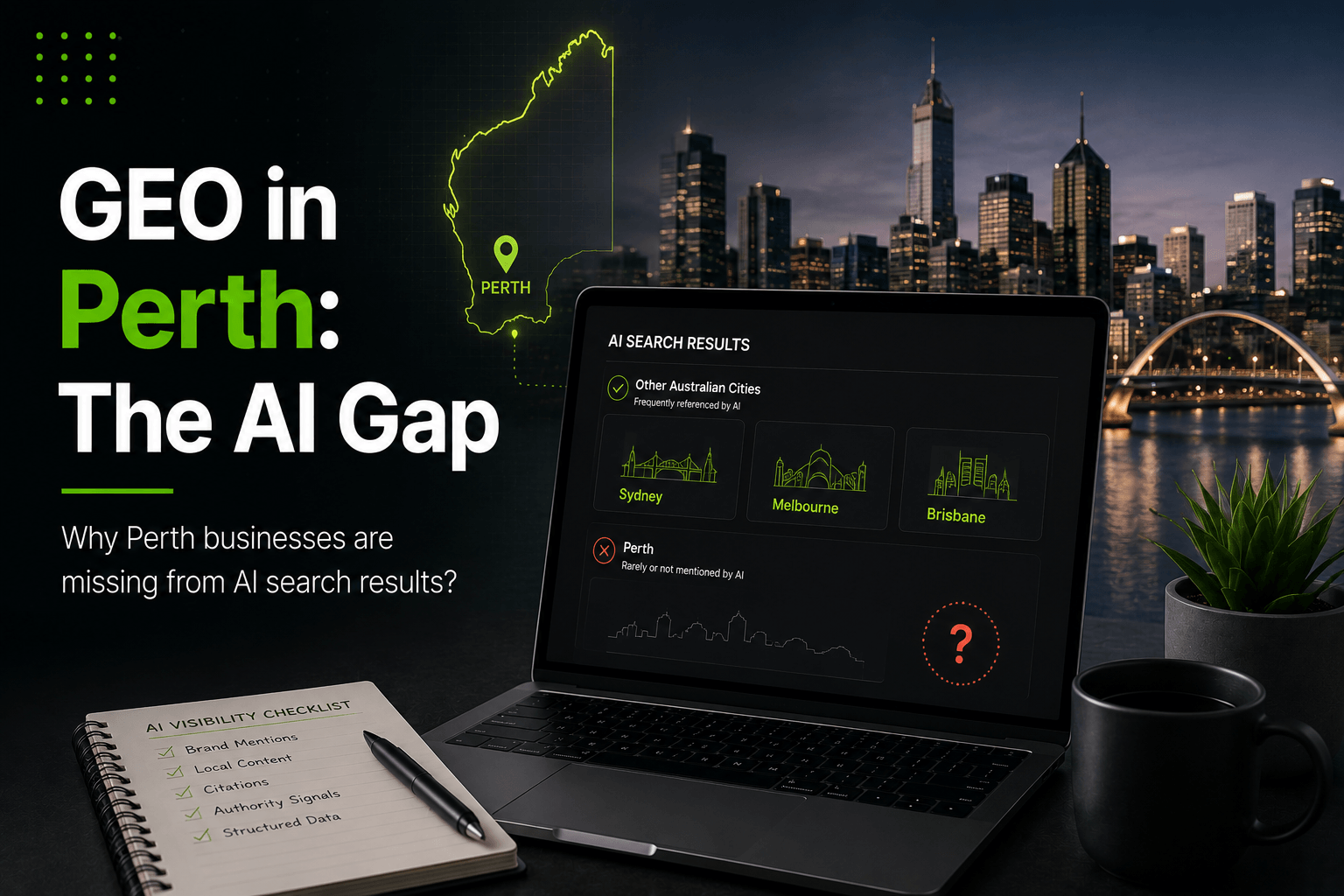
The result is that thousands of Australian businesses are invisible in AI-generated answers - and they do not know it. Their competitors are being cited. Their potential customers are receiving AI recommendations that do not include them. And the gap widens every week.
A GEO audit is the first step to fixing this. It is a systematic process of measuring your current AI search visibility - across every major platform - so you know exactly where you stand, what the gaps are, and what needs to be done. This guide walks you through exactly how to conduct one.
What Is a GEO Audit?
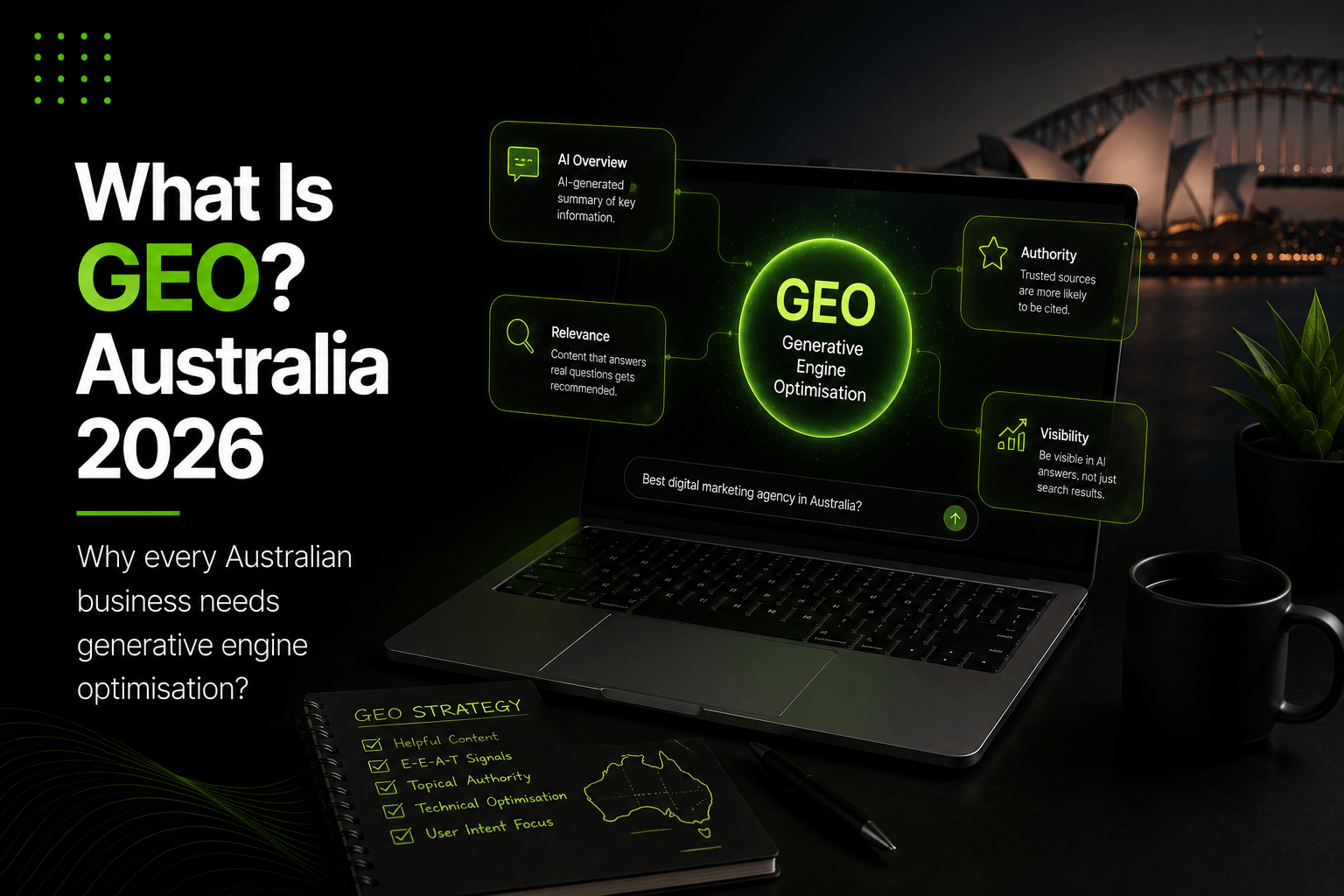
A GEO audit - Generative Engine Optimisation audit - is a structured evaluation of how AI search platforms currently represent, describe, and cite your brand when answering relevant user queries. It measures three things: whether AI systems know your brand exists, how accurately they describe what you do, and how consistently you are cited when potential customers ask for businesses like yours.
A GEO audit is the AI equivalent of a traditional SEO audit, except instead of checking your keyword rankings and backlinks, you are checking your citation rates and brand representation across ChatGPT, Google AI Overviews, Perplexity, and Gemini.
💡 Every GEO strategy starts with a GEO audit. You cannot improve your AI visibility without first measuring your baseline. Skipping the audit is like doing SEO without first checking what you currently rank for.
Why a GEO Audit Is More Urgent Than Most Businesses Realise?
Many Australian businesses assume their good Google rankings translate to AI search visibility. They do not. The research on this is unambiguous.
📊 Only 12% of URLs cited by AI search engines rank in Google's top 10 for the same prompt (Ahrefs, 2026). Your Google ranking does not predict your AI citation rate.
This means a business that ranks first on Google for 'family lawyer Brisbane' may never be mentioned when someone asks ChatGPT 'who is the best family lawyer in Brisbane'. The two channels evaluate authority and relevance differently. A GEO audit reveals this gap - and quantifies it - so you can address it strategically.
Part 1: The Manual GEO Audit - Do This First
Before using any tools, start with a manual audit. This gives you an immediate, real-world picture of your AI search visibility in the same way your potential customers experience it.
Step 1: Build Your Prompt List
Create a list of 15 to 20 prompts that represent how your potential customers would ask AI platforms about your business category. Include four types of prompts:
Category prompts - broad awareness queries
'What are the best [your service] companies in Australia?' / 'Who are the top [your industry] providers in [your city]?' / 'What should I look for in a [your business type]?'
Comparison prompts - evaluation-stage queries
'What is the difference between [your service type A] and [your service type B]?' / 'How do I choose between [provider type] in [city]?' / 'Is [your company name] a good [service type]?'
Decision prompts - high-intent buying queries
'Who should I hire for [specific service] in [city]?' / 'What is the best [your service type] agency in [city]?' / 'Can you recommend a [your business type] near me?'
Brand-specific prompts - direct brand awareness
'What does [your company name] do?' / 'Tell me about [your company name].' / 'Is [your company name] reputable?'
Step 2: Query Each AI Platform
Run each of your 15 to 20 prompts across all four major AI platforms:
- ChatGPT (chat.openai.com) - most widely used AI, highest query volume
- Google AI Overviews - appears directly in Google search results for many queries
- Perplexity AI (perplexity.ai) - growing rapidly in Australia, cites sources directly
- Google Gemini (gemini.google.com) - integrated into Google Workspace and Android
For each prompt on each platform, record: whether your brand is mentioned, how accurately it is described, whether competitors are mentioned instead, and what language the AI uses to describe businesses in your category.
Step 3: Record and Score Your Results
Create a simple tracking document for each prompt and platform. For every query you run, record whether your brand was mentioned (yes, no, or partially), how accurately the AI described your business (correct, partially correct, incorrect, or no description at all), which competitors were cited in your place, which website or source the AI appeared to be drawing from, which platform you tested (ChatGPT, AI Overviews, Perplexity, or Gemini), and what type of prompt it was (category, comparison, decision, or brand-specific).
After running all prompts across all platforms, calculate your citation rate - the percentage of prompts where your brand is mentioned. Track it over time and watch the trend: the direction of travel tells you far more than any single reading, and there is no reliable published benchmark for what a "good" citation rate looks like by industry.
Part 2: Technical GEO Audit - What AI Systems Can Actually Read
Even if your content is excellent, AI systems may not be able to access it. A technical GEO audit checks the infrastructure issues that block AI from crawling and using your content.
Check AI Bot Access - robots.txt
Your robots.txt file tells web crawlers which pages they can and cannot access. Many Australian websites are accidentally blocking AI crawlers. Open your website's robots.txt file (yourwebsite.com/robots.txt) and check whether it blocks any of these AI user agents:
- GPTBot (OpenAI's crawler)
- Google-Extended (Google's AI training crawler)
- CCBot (Common Crawl - used by many AI systems)
- PerplexityBot
- anthropic-ai
⚠️ A significant number of Australian websites block AI crawlers through Cloudflare's default bot protection settings. If your website uses Cloudflare, check your bot management settings - you may be blocking AI platforms from reading your content entirely.
Schema Markup Audit
Schema markup is structured data that helps AI systems understand your content.
Check whether your website has the following schema types implemented:
- Organization schema - your business name, description, location, and contact details
- LocalBusiness schema - for businesses serving Australian cities and suburbs
- FAQPage schema - FAQ content marked up for AI extraction
- Article or BlogPosting schema - for content and thought leadership articles
- Service schema - for each service your business offers
Missing schema markup means AI systems must guess at the context of your content. Well-implemented schema provides explicit, machine-readable signals about what your business does and why it is relevant to specific queries.
Content Structure Audit
AI systems struggle to extract and cite content that is buried in long, dense paragraphs.
Audit your key service and landing pages for the following:
- Are direct answers placed at the start of each section, or buried after paragraphs of preamble?
- Are there clear H2, H3, and H4 heading hierarchies that AI can navigate?
- Are there FAQ sections with direct question-and-answer format?
- Are paragraphs under 3 sentences, or are they dense blocks of text?
- Are claims backed by statistics, citations, or named sources?
📊 The Princeton GEO study found that optimising content with statistics, quotations and cited sources can boost visibility in generative engine responses by up to 40% (Aggarwal et al., KDD 2024).
Part 3: Authority and Entity Audit
AI systems do not just evaluate your website in isolation. They evaluate your entire digital footprint - how well-known and well-represented your brand is across the web.
Google Knowledge Panel Check
Search for your business name on Google. Does a Knowledge Panel appear on the right side of the results? A Knowledge Panel means Google has constructed an entity record for your business - and this entity data feeds into AI systems. If there is no Knowledge Panel, or if the information is incorrect, this is a significant GEO gap.
Third-Party Mention Audit
AI systems draw on a wide range of third-party sources when building their understanding of a brand.
Audit your presence across:
- Industry directories and association listings
- Review platforms - Google Business Profile, Trustpilot, ProductReview
- News and media mentions - local and national publications
- LinkedIn - your company page and team member profiles
- Podcast appearances, webinar features, and speaking engagements
- Guest articles and bylines in industry publications
The more consistent, accurate, and authoritative your brand representation across these external sources, the more confident AI systems are in citing you.
What to Do With Your GEO Audit Findings?
Once your audit is complete, you will have a clear picture of your AI search visibility gaps. Prioritise fixes in this order:
Priority 1 - Technical fixes
Fix any robots.txt blocks preventing AI crawlers. Implement missing schema markup. These are quick wins that immediately improve AI access to your content.
Priority 2 - Content restructuring
Restructure your highest-traffic pages for AI readability. Add FAQ sections. Shorten paragraphs. Add direct answers at the top of each section. Back claims with statistics.
Priority 3 - Entity and authority building
Build your Google Knowledge Panel. Clean up and expand your business directory listings. Commission guest articles and media coverage. Build the external citation signals AI models rely on.
Priority 4 - Ongoing monitoring
A GEO audit is not a one-time exercise. Re-run your prompt list monthly to track citation rate improvements and catch any new gaps as AI platform behaviour evolves.
Frequently Asked Questions
Q. How long does a GEO audit take?
A manual GEO audit using 15 to 20 prompts across four AI platforms takes approximately 3 to 4 hours for a business owner to conduct themselves. A professional GEO audit from a specialist agency - including technical analysis, schema review, entity audit, and competitor benchmarking - typically takes 3 to 5 business days to complete and deliver.
Q. What is a good GEO citation rate for an Australian business?
Treat your first measurement as a baseline rather than a score. What matters is whether your citation rate rises as you publish citable, well-sourced content, and whether those citations appear on high-intent decision-stage queries rather than only on broad category ones.
Q. Should I hire a GEO agency for my audit?
A manual audit using the process in this guide gives you an immediate baseline at no cost. For a comprehensive audit covering technical GEO, competitor benchmarking, schema analysis, entity footprint, and strategic recommendations - a specialist GEO agency delivers significantly more depth and actionable output. Most Australian businesses use a self-conducted audit to understand the problem and a professional audit to plan the solution.
Want a professional GEO audit for your Australian business? Ziff Digital conducts comprehensive GEO audits - measuring your AI citation rate, identifying gaps, and delivering a clear improvement roadmap.