Why Your Content Is Not Appearing in AI-Generated Answers (And How to Fix It)
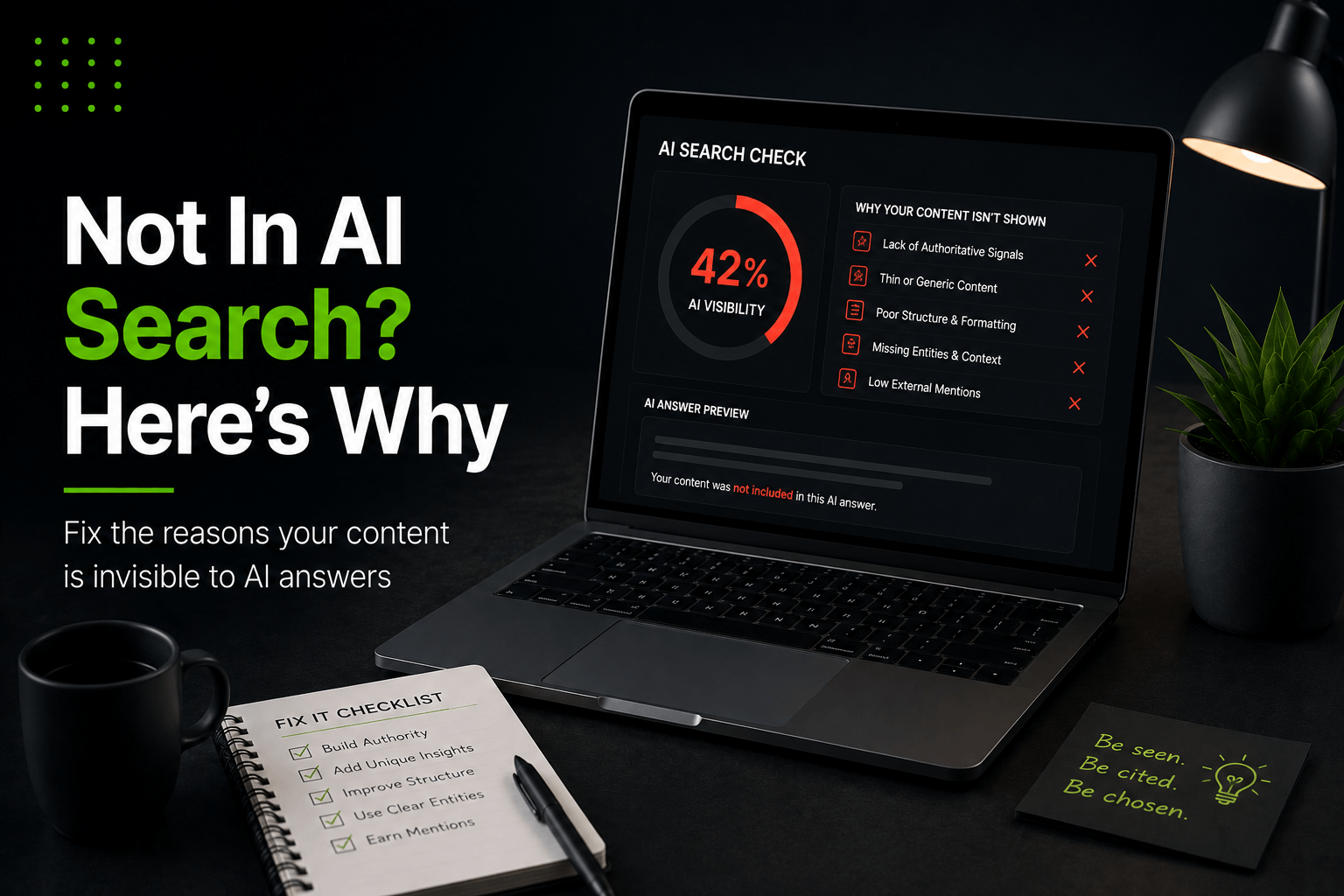
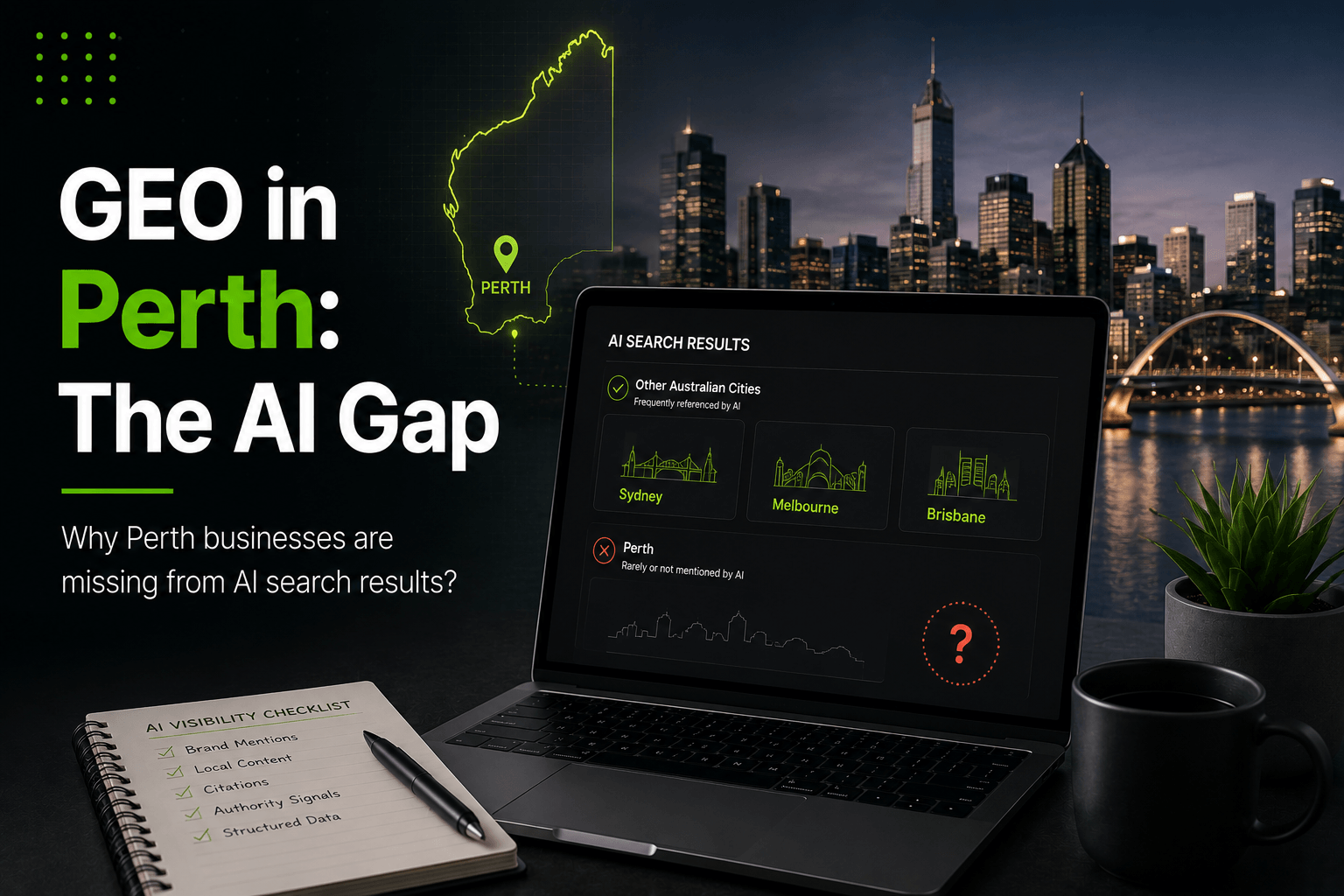
You have done the work. Your website has good content. Your Google rankings are respectable. You have been investing in SEO for years. And yet when a potential customer opens ChatGPT and asks for recommendations in your industry - your business does not appear. Competitors you have outranked on Google for years are being cited instead. What is going on?
The answer is that traditional SEO and generative engine optimisation (GEO) measure different things, reward different signals, and require different content strategies. Being good at one does not guarantee success at the other. In fact, the research is quite specific: only 12% of URLs cited by AI search engines rank in Google's top 10 for the same prompt (Ahrefs, 2026).
This guide covers the most common reasons Australian businesses are invisible in AI-generated answers - and the specific fixes for each one.
Reason 1: AI Bots Cannot Actually Read Your Website
The most fundamental GEO problem is also the most overlooked: your website may be physically blocking AI search engines from reading your content. If AI crawlers cannot access your pages, they cannot cite you - regardless of how good your content is.
The Fix: Check and Update Your robots.txt
Open your website's robots.txt file (yourwebsite.com/robots.txt) and look for any Disallow rules that might be blocking AI crawlers. Specific user agents to check include GPTBot (OpenAI), Google-Extended (Google AI), PerplexityBot, anthropic-ai, and CCBot.
⚠️ Many Australian websites using Cloudflare's bot management have accidentally blocked AI crawlers. Cloudflare's default settings may be configured to block 'bad bots' - and some configurations sweep up AI crawlers in this category. Check your Cloudflare bot management dashboard specifically.
Also verify that your key service and landing pages are not marked with noindex meta tags, as these pages will be excluded from AI search alongside traditional search.
Reason 2: Your Content Answers the Wrong Questions
Traditional SEO content is often written to rank for specific keyword phrases. GEO requires content that directly answers the conversational questions real users ask AI platforms. These are different writing tasks - and content written primarily for keyword ranking rarely translates directly into AI citations.
AI systems are looking for direct, extractable answers. When a user asks 'What is the best accounting software for small businesses in Australia?', the AI scans multiple sources looking for content that directly addresses this question. Content that buries the answer under paragraphs of preamble, or that focuses on keyword repetition rather than direct question-answering, will be bypassed.
The Fix: Restructure Content Around Direct Answers
- Lead each section with a direct answer to the implied question - do not build up to it
- Add explicit FAQ sections targeting the conversational queries in your industry
- Shorten paragraphs to 2 to 3 sentences maximum - AI systems prefer scannable content
- Use clear H2, H3, and H4 headings that describe what each section answers
- Write for the question your reader would type into ChatGPT, not just for a keyword
📊 The Princeton GEO study tested around 10,000 real queries and found that adding statistics, citations and authoritative quotations can boost visibility in generative engine responses by up to 40% (Aggarwal et al., KDD 2024).
Reason 3: You Are Not Using Statistics or Evidence
AI systems are trained to value evidence-backed content. When an AI evaluates multiple sources to generate an answer, it prefers sources that make claims supported by specific data, research, or named authorities - over sources that make the same claims without supporting evidence.
Most business website content makes assertive claims without evidence: 'We are the leading web development agency in Sydney.' 'Our services deliver results for Australian businesses.' These statements are not citations - they are marketing copy. AI systems treat them accordingly.
The Fix: Add Evidence to Your Content Systematically
- Back every major claim with a specific statistic, study result, or industry data point.
- Cite the source of your statistics - named research organisations, government data, industry reports.
- Include client outcomes with specific numbers: 'reduced processing time by 40 percent', 'increased conversion rate from 1.2 to 3.8 percent'.
- Reference authoritative third-party sources relevant to your industry.
- If you do not have third-party statistics available, cite your own methodology and sample size.
💡 You do not need to reference academic studies for every paragraph. Industry reports, government statistics, your own case study data, and client outcome numbers all qualify as evidence that AI systems treat as credibility signals.
Reason 4: AI Systems Do Not Recognise Your Brand as a Real Entity
AI models have knowledge about brands, built from the information they have encountered across the web. If your business has a thin or inconsistent digital footprint - limited third-party mentions, no Google Knowledge Panel, few external citations, inconsistent NAP (Name, Address, Phone) data across directories - AI systems may not have enough confidence in your brand to cite it.
Entity recognition is how AI models understand that 'Ziff Digital' and 'Ziff Digital Pty Ltd' and 'ziffdigital.com' all refer to the same real business. When entity data is inconsistent or sparse, AI systems default to brands they know more about - typically your competitors with stronger digital footprints.
The Fix: Build Your Brand Entity Presence
- Ensure your business name, address, and phone number are identical across every platform (Google, LinkedIn, directories, website).
- Claim and fully optimise your Google Business Profile - this is the primary entity data source Google AI uses.
- Get your business listed in reputable industry directories and professional associations.
- Pursue genuine media mentions - local business news, industry publications, podcast appearances.
- Encourage clients to leave reviews on Google and industry-specific review platforms.
- Build a complete LinkedIn company page with detailed description, industry, and location data.
Reason 5: Your Content Lacks Topical Authority
AI systems prefer to cite sources that demonstrate deep, comprehensive expertise in a topic - not sources that have one good page about a subject. Topical authority is built by consistently covering a subject area from multiple angles, at depth, over time.
A law firm that has one page about family law will be consistently out-cited by a law firm that has a dedicated family law service page, 15 blog posts answering specific family law questions, FAQ content covering common concerns, and case study content describing client outcomes - even if both firms are equally good at family law in practice.
The Fix: Build Content Clusters Around Your Core Topics
- Identify 3 to 5 core topic areas your business should own in AI search.
- For each topic, create a comprehensive pillar page - a thorough overview of the entire subject.
- Develop supporting blog posts targeting specific questions within each topic area.
- Build FAQ content targeting the exact conversational queries your clients ask.
- Create case study content that demonstrates real-world application of your expertise.
- Link all related content together through internal links to reinforce topical clusters.
Reason 6: You Have No Schema Markup
Schema markup is structured data - code that sits in your website's HTML and provides explicit, machine-readable information about your content. It tells AI systems exactly what type of content they are reading, what your business is, where you are located, what questions your FAQ content answers, and how your content should be interpreted.
Without schema markup, AI systems must infer the context of your content from the text alone. With well-implemented schema, you are giving AI systems a direct, reliable guide to your content. This significantly improves the probability of your content being correctly identified and cited.
The Fix: Implement Priority Schema Types
- Organization or LocalBusiness schema - your business name, description, location, contact, and industry
- FAQPage schema - mark up every FAQ section so AI systems can extract Q&A pairs directly
- Service schema - for each service page, specifying what the service is and who it is for
- Article schema - for blog posts and thought leadership content
- BreadcrumbList schema - to help AI systems understand your site structure
Reason 7: Your Content Is Not Fresh Enough
AI systems - particularly Google AI Overviews - apply freshness signals when evaluating content for time-sensitive queries. Articles with visible update dates, current-year statistics, and recent examples are preferred over evergreen content that has not been updated in years.
For Australian businesses in fast-moving categories - technology, digital marketing, legal services with changing regulations, healthcare with evolving guidelines - outdated content is actively penalised in AI search even if it ranks well in traditional Google results.
The Fix: Implement a Content Freshness Programme
- Add 'Last Updated: [date]' signals to your important pages and blog posts.
- Audit your top-performing pages annually and update statistics, examples, and references.
- Add a 'What Changed in 2026' or 'Updated for 2026' section to high-traffic evergreen content.
- Publish new content consistently - AI systems reward brands that demonstrate ongoing expertise.
- Remove or redirect outdated content that contradicts your current expertise.
The Priority Fix Order: Where to Start?
With multiple potential reasons your content is not appearing in AI-generated answers, knowing where to start is important. Work through fixes in this order for maximum impact with minimum time investment:

Content Optimisation For AI-Generated Answers (Priority Fix Order)
Frequently Asked Questions
Q. How quickly will my content appear in AI-generated answers after I make these fixes?
Technical fixes - unblocking AI crawlers and implementing schema markup - can produce improvements within 1 to 4 weeks as AI systems re-crawl your website. Content restructuring and FAQ additions typically show citation improvements within 4 to 8 weeks. Entity building and content cluster development take 2 to 4 months to produce consistent citation improvements. The timeline depends on how competitive your category is and how authoritative your brand already is.
Q. Do I need to update all my content at once?
No. Prioritise your highest-traffic pages and your most important service pages first. Restructure those for AI readability, add FAQ sections, implement schema markup, and add statistical evidence. Once the highest-priority pages are optimised, work through the rest of your content systematically. Incremental improvement produces incremental citation improvements - you do not need to wait until everything is perfect to start seeing results.
Q. My content is good quality - why is it still not being cited?
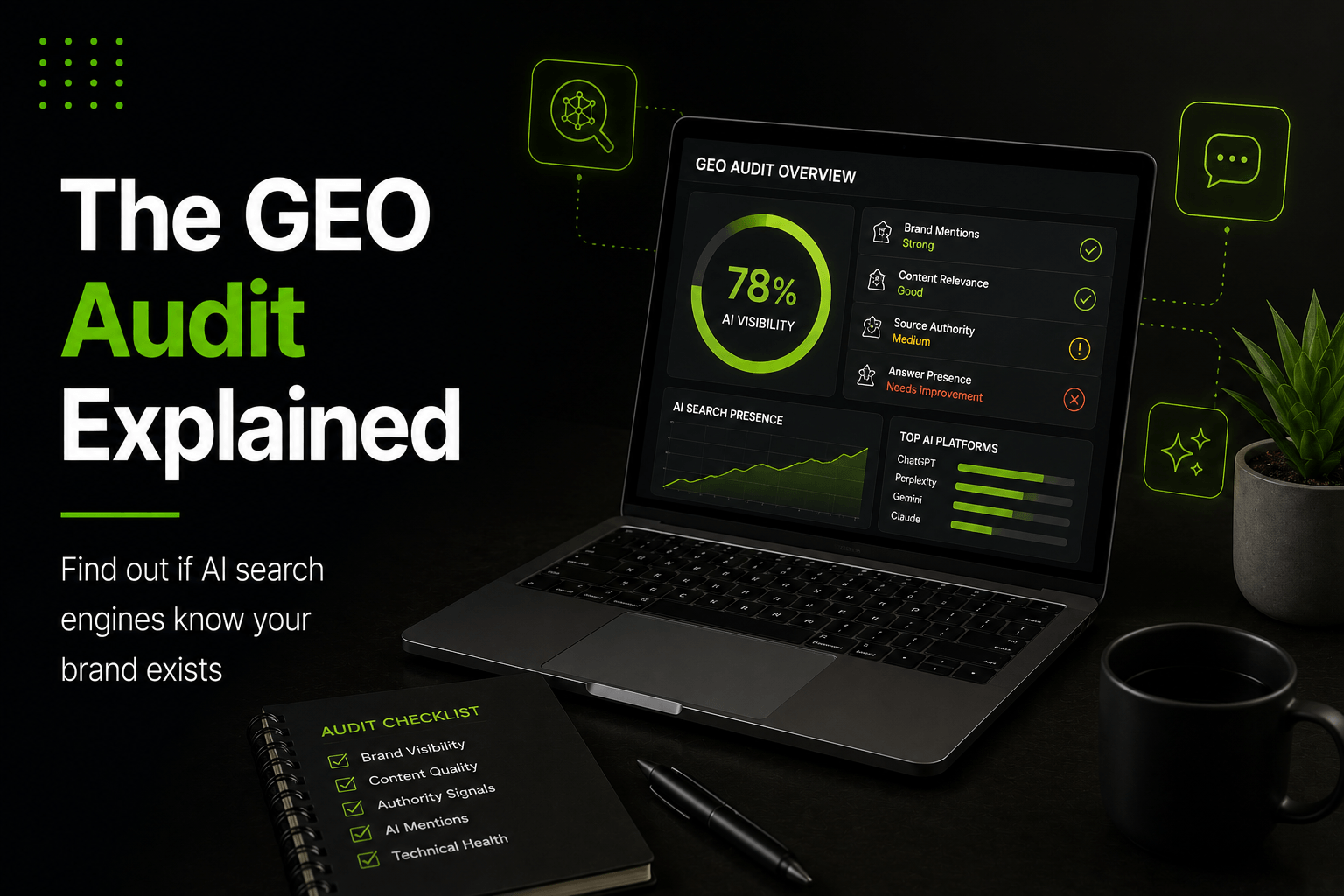
Content quality is necessary but not sufficient for AI citation. AI systems also require structural accessibility (AI crawlers can reach your content), structural clarity (content is formatted for extraction), entity recognition (AI systems know your brand exists), and topical authority (your brand consistently covers the subject area). A site with excellent content but technical blocking, no schema, and thin entity presence will still be invisible in AI search regardless of content quality.
Want expert help identifying exactly why your Australian business is not appearing in AI search results? Ziff Digital provides professional GEO audits and optimisation services - book a free consultation today.