The Complete Guide to Mobile App Development Services in Australia
You have a great app idea. Maybe it solves a real problem. Maybe it fills a gap your competitors have missed. Maybe it could genuinely change the way your customers interact with your business.
But between "great idea" and "live on the App Store" sits a process that most business owners are completely unprepared for.
This guide exists to change that. Whether you are a startup founder, a business owner, or a marketing manager tasked with getting an app built — by the end of this, you will know exactly what mobile app development involves, what it costs in Australia, and how to avoid the mistakes that sink most projects before they even launch.
What Are Mobile App Development Services — And What Do They Actually Include?
When people say "mobile app development services," they usually picture someone writing code. The reality is much broader.
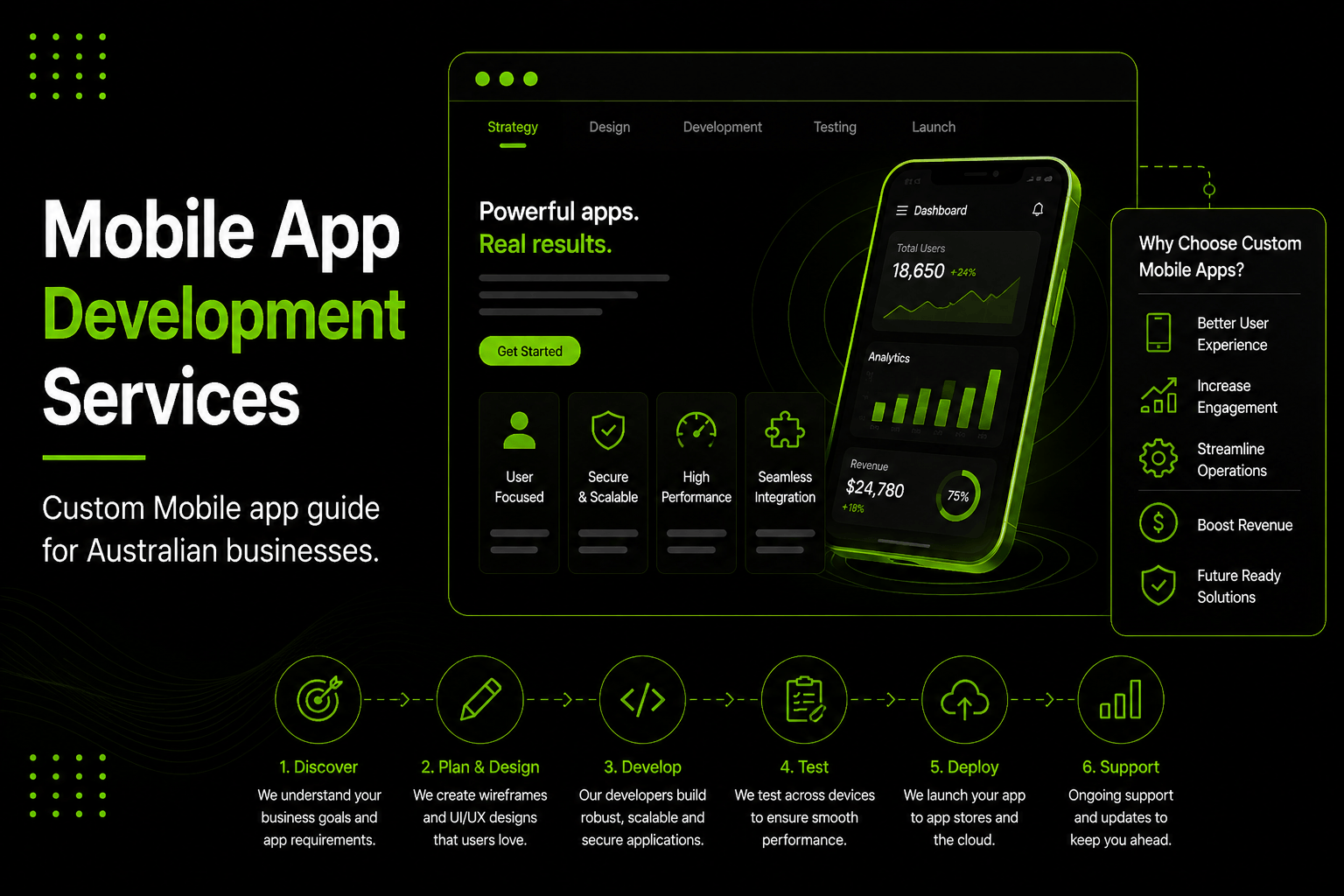
A proper mobile app development service covers the entire journey from concept to live product. That includes:
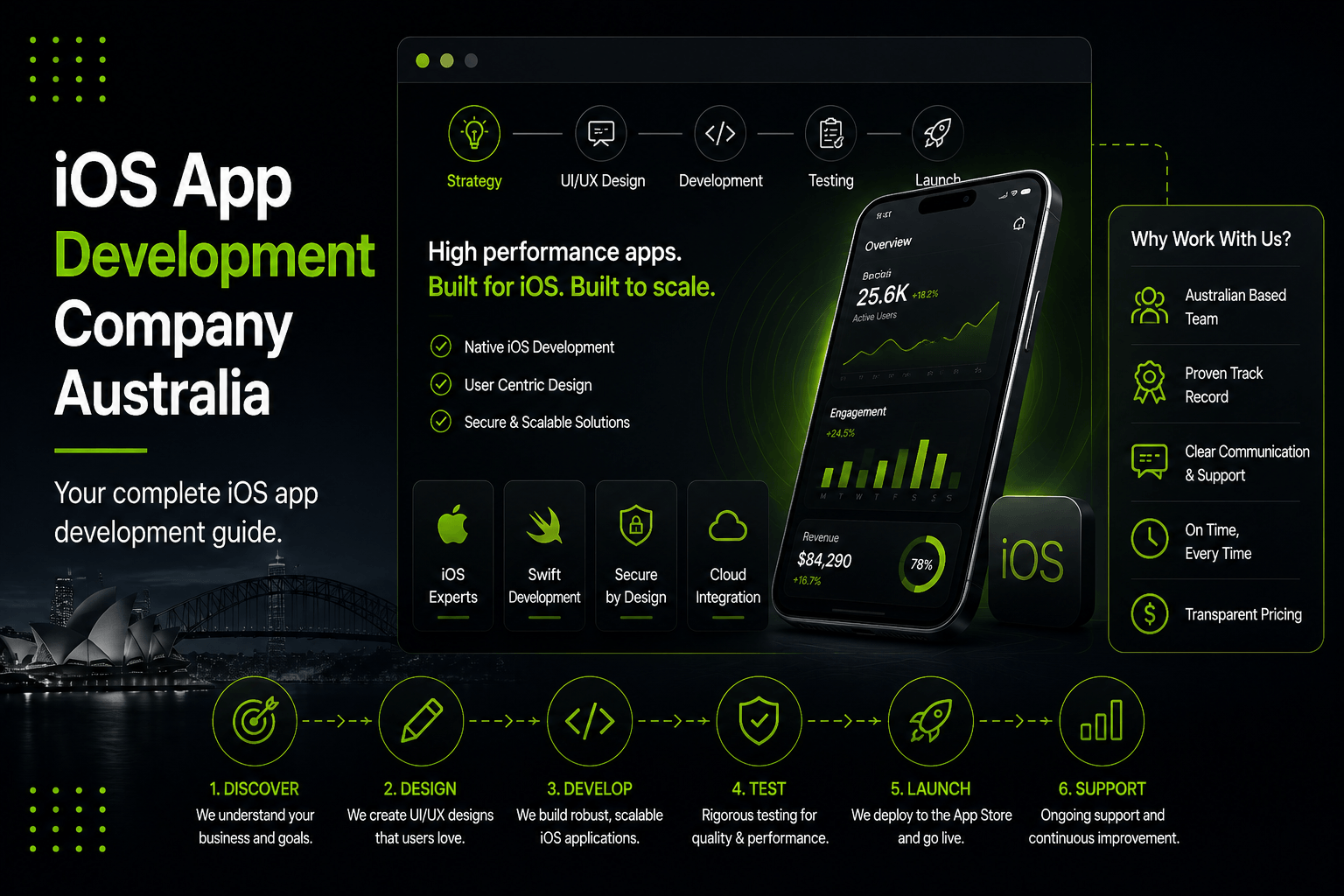
- Discovery and strategy — understanding your business goals, target users, and technical requirements before a single line of code is written.
- UI/UX design — designing the screens, flows, and interactions that make your app intuitive and enjoyable to use.
- Frontend development — building what users see and interact with on their device.
- Backend development — building the server, database, and logic that powers everything behind the scenes.
- API integration — connecting your app to third-party tools, payment gateways, maps, CRMs, or any external system.
- Testing and QA — systematically finding and fixing bugs before your users do.
- App Store deployment — submitting your app to the Apple App Store and Google Play Store, including compliance checks.
- Post-launch support — keeping your app updated, secure, and performing as your user base grows.
If any mobile app development company you speak to skips over these areas or cannot explain their process for each one — that is a red flag.
Native vs Cross-Platform — Which One Does Your Business Actually Need?
This is one of the first decisions you will face, and it is one of the most misunderstood.
Native App Development
Native apps are built specifically for one platform — iOS using Swift, or Android using Kotlin. They are faster, smoother, and have full access to device features like the camera, GPS, and biometrics.
Best for: Apps where performance is critical, apps with complex animations or hardware interactions, or businesses with the budget to maintain two separate codebases.
Cross-Platform App Development
Cross-platform frameworks like React Native and Flutter allow you to write one codebase that runs on both iOS and Android. The experience is very close to native — and the cost and timeline are significantly lower.
Best for: Startups and SMEs launching their first version, businesses that want to validate an idea before investing in full native builds, or apps without extreme performance requirements.
For most Australian businesses building their first app, cross-platform is the smarter starting point. You launch faster, spend less, and gather real user data before deciding whether to invest in native later.
How Much Do Mobile App Development Services Cost in Australia?
Let us be direct — Australian app development costs more than offshore, and for good reason.
Here is a realistic breakdown:
Simple app (basic features, one platform): $15,000 – $30,000 AUD
Mid-complexity app (custom backend, API integrations, two platforms): $30,000 – $80,000 AUD
Complex app (advanced features, real-time functionality, enterprise integrations): $80,000 – $200,000+ AUD
The biggest cost drivers are:
- Number of screens and features
- Whether you need a custom backend or can use existing infrastructure
- iOS only, Android only, or both
- Level of UI/UX design complexity
- Third-party integrations (payments, maps, booking systems, etc.)
- Post-launch support requirements
One thing worth understanding — the cheapest quote is almost never the best value. An app built poorly the first time will cost two to three times more to rebuild correctly. Australian businesses that try to save money by going offshore frequently end up coming to local agencies to fix what was broken.
How Long Does It Take to Build a Mobile App?
Timelines are directly tied to complexity. Here is what you can realistically expect:
Simple app: 8 – 12 weeks
Mid-complexity app: 3 – 5 months
Complex or enterprise app: 6 – 12 months
These timelines assume a proper discovery phase happens first. Agencies that promise to skip discovery and go straight to development are cutting corners that will cost you later.
A realistic timeline for a typical Australian SME app — cross-platform, custom backend, 10–15 screens — is around 4 months from kickoff to App Store submission.
5 Things That Kill Mobile App Projects Before They Launch
After working with businesses across Australia, here are the most common reasons apps fail to reach the App Store:
1. No discovery phase: Jumping into development without fully mapping out features, user flows, and technical requirements leads to constant scope changes, budget blowouts, and missed deadlines.
2. Building for themselves, not their users: Business owners naturally think about what they want in an app. Great apps are built around what users need. These are often very different things.
3. Trying to build everything in version one: The best apps launch lean. Build your core feature set first, get it in front of real users, gather feedback, and iterate. Trying to build every feature upfront delays your launch and burns budget on features users may not even want.
4. Ignoring performance from the start: Performance cannot be bolted on at the end. An app that loads slowly, drains battery, or crashes under load will be deleted immediately. Performance needs to be designed in from day one.
5. No post-launch plan: The App Store is not a "set and forget" environment. Operating system updates, new device sizes, security patches, and user feedback all require ongoing attention. Budget for post-launch support before you build.
What to Look For in a Mobile App Development Company in Australia?
Not all development agencies are equal. Here is what separates great ones from average ones:
- A structured discovery process — they ask hard questions before writing code.
- A portfolio of real, live apps — not just mockups or prototypes.
- Transparent pricing — itemised estimates, not vague ballparks.
- In-house design capability — great apps require great design, not just great code.
- Clear communication — weekly updates, access to project management tools, and a single point of contact.
- Post-launch support — they are still around after the app goes live.
- Australian-based team — time zone alignment, local market knowledge, and legal accountability matter.
Ready to Build Your Mobile App in Australia?
Your app idea deserves more than a cheap quote and a promise. It deserves a team that will ask the right questions, design with your users in mind, and build something that actually works in the real world.
Ziff Digital is a leading mobile app development company in Australia, building custom iOS, Android, and cross-platform apps for startups, SMEs, and enterprises across Sydney, Melbourne, Brisbane, Perth, and Adelaide.