GEO vs SEO: Why You Need a Combined Strategy in 2026

Search in 2026 is no longer limited to ranking on Google. Users now get answers from AI tools, search engines, voice assistants, and conversational platforms. Because of this shift, businesses must optimise their websites not only for traditional search engines but also for generative AI systems. Understanding GEO vs SEO is now essential for any company that wants to stay visible online.
Search Engine Optimisation (SEO) still builds the technical and authority foundation of a website, but Generative Engine Optimisation (GEO) ensures your content is selected by AI when answers are generated. When used together, these strategies help your brand appear in search results, AI summaries, and conversational responses across modern platforms.
What Is GEO vs SEO?
SEO and GEO are often confused, but they serve different purposes. SEO focuses on improving rankings in search engines, while GEO focuses on making your content the source AI chooses when generating answers. In 2026, both are required to maximise online visibility.
What SEO Means Today?
SEO is the process of optimising a website so search engines can crawl, understand, and rank it correctly. It ensures your content appears when users search for relevant topics.
SEO includes:
- Technical optimisation
- Keyword targeting
- Backlink building
- Site speed improvements
- Internal linking
- Content quality
- Mobile optimisation
- Structured data
- Indexing and crawlability
The main goals of SEO are:
- Increase rankings
- Drive organic traffic
- Improve visibility
- Build authority
- Generate leads
Without strong SEO, your website may never be trusted enough to appear in search results or AI summaries.
What GEO Means Today?
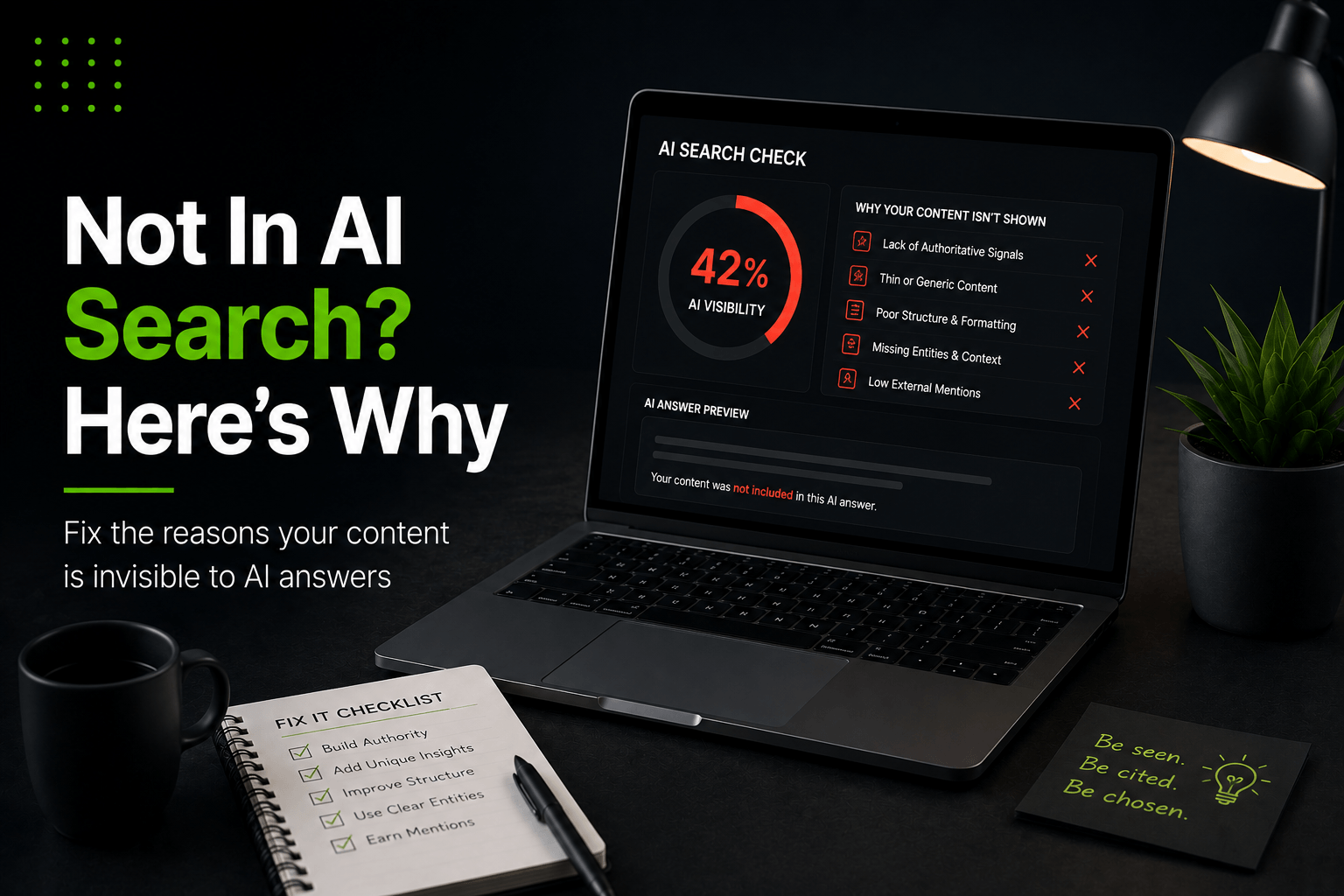
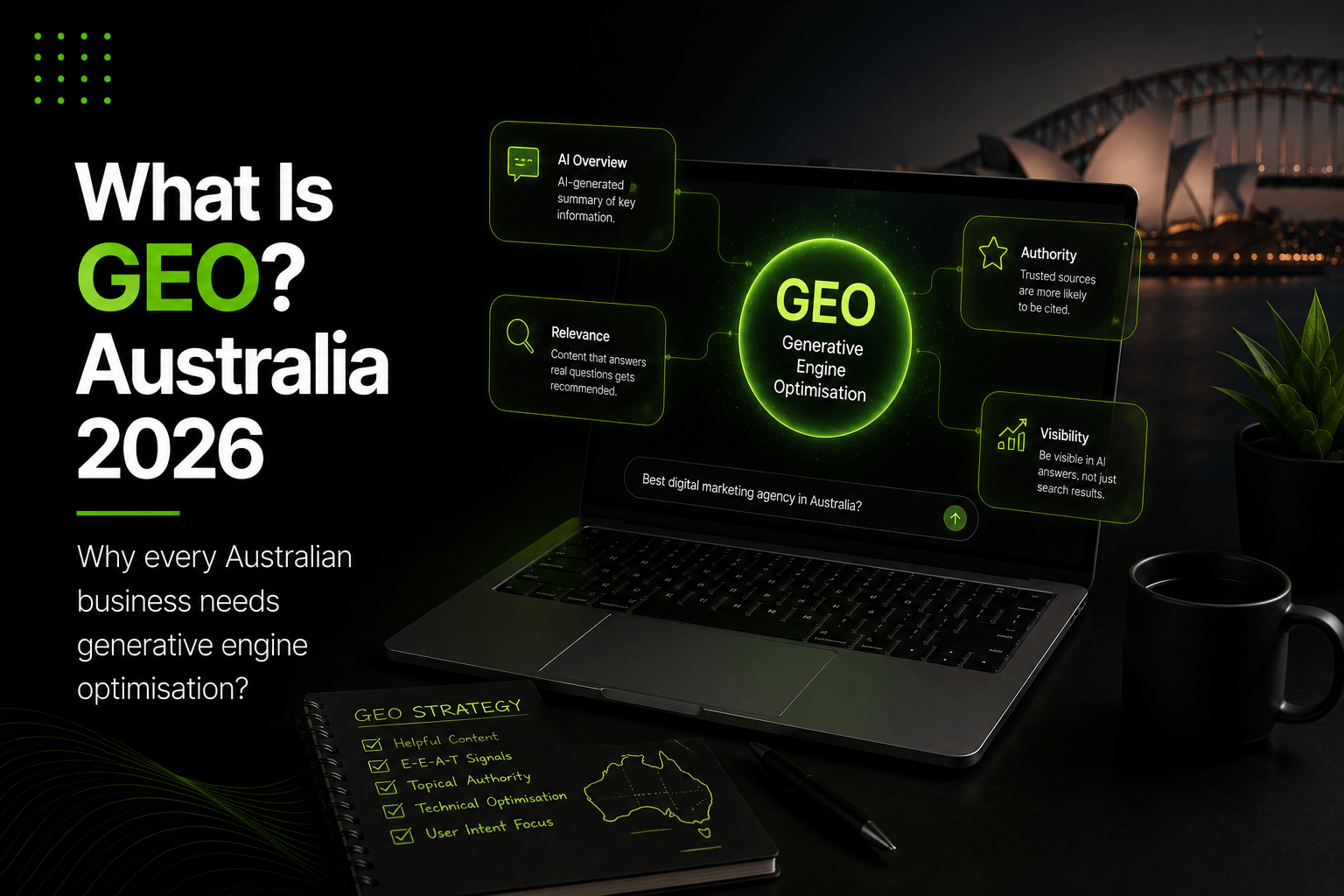
Generative Engine Optimisation is the process of optimising content so AI systems can understand it and use it when generating answers. Instead of focusing only on rankings, GEO focuses on being the chosen source.
GEO focuses on:
- Semantic relevance
- Entity recognition
- Conversational structure
- Clear explanations
- Authoritative signals
- Structured formatting
- Contextual writing
- Question–answer content
- Topic depth
The goals of GEO are:
- Be cited by AI
- Appear in summaries
- Show in chat responses
- Increase brand authority
- Improve trust signals
This is why understanding GEO vs SEO is critical for modern digital marketing.
Why Search in 2026 Requires Both GEO and SEO?
Search behaviour has changed. Users now expect answers instantly, and AI systems provide those answers by combining information from multiple sources. This means ranking alone is no longer enough. Your content must also be easy for AI to understand.
Modern search can appear in many formats:
- Google results pages
- AI Overviews
- ChatGPT responses
- Perplexity answers
- Voice assistants
- Smart devices
- In-app search
- Knowledge panels
If your content is only optimised for SEO, you may rank but not be cited. If your content is only optimised for GEO, you may be clear but not trusted.
A combined strategy ensures visibility everywhere users search.
How SEO Provides the Foundation for GEO?
SEO builds the trust signals that generative engines rely on. AI models often use search engine authority, backlinks, and site quality as indicators of credibility. Without a strong SEO base, GEO cannot perform effectively.
Technical SEO ensures your website is reliable and easy to read for both search engines and AI systems.
Important SEO foundations include:
- Fast loading speed
- Mobile-friendly design
- Secure HTTPS
- Clean site structure
- XML sitemap
- Internal linking
- Schema markup
- Optimised images
- Core Web Vitals
- Crawl error fixes
Backlinks also play a major role because they show that other websites trust your content.
Strong authority signals help your site:
- Rank higher
- Get indexed faster
- Be trusted by AI
- Appear in summaries
- Gain credibility
SEO builds the reputation. GEO uses that reputation.
How GEO Adds AI-Friendly and Conversational Optimisation?
GEO focuses on how content is written and structured so AI models can understand it easily. Large language models prefer content that is clear, logical, and organised into small pieces of information.
Good GEO content follows a pattern:
- Definition
- Explanation
- Process
- Example
- Summary
This format makes it easy for AI to extract information.
Best practices for GEO writing:
- Use question headings
- Start sections with direct answers
- Write short paragraphs
- Use lists and examples
- Include recognised entities
- Add context and relationships
- Avoid keyword stuffing
- Use natural language
- Cover topics deeply
Entity recognition is especially important because AI models use entities to confirm meaning.
Examples of useful entities:
- ChatGPT
- Perplexity
- AI search
- schema markup
- semantic SEO
- large language models
This is why agencies like Ziff Digital optimise content using both SEO authority and GEO structure to help Australian businesses appear in modern search results.
Why AI Models Prefer Structured and Authoritative Content?
AI systems do not read content the same way humans do. They look for patterns, clarity, and reliable signals. Content that is organised properly is easier to summarise and more likely to be cited.
AI prefers content that includes:
- Clear headings
- Direct answers
- Logical flow
- Data and facts
- Definitions
- Examples
- Author signals
- Schema markup
- Topic consistency
Content that looks like a guide performs better than content that looks like opinion writing.
Authority signals that improve GEO:
- Expert authorship
- Consistent topic coverage
- High-quality backlinks
- Accurate information
- Updated content
- Strong domain history
When your site shows authority, AI is more likely to trust it.
GEO vs SEO: Key Differences Explained
Understanding GEO vs SEO helps businesses create a strategy that works across both traditional and AI search systems.
Key differences include:
- SEO focuses on rankings, GEO focuses on answers
- SEO targets keywords, GEO targets meaning
- SEO improves pages, GEO improves understanding
- SEO drives clicks, GEO drives citations
- SEO builds authority, GEO uses authority
- SEO works for search engines, GEO works for AI
Both strategies solve different problems, which is why combining them gives the best results.
How a Combined Strategy Maximises Your Digital Footprint?
Using both SEO and GEO allows your brand to appear in more places than ever before. Instead of relying on one platform, you can gain visibility across search engines, AI tools, and conversational interfaces.
Benefits of combining both:
- Rank in Google
- Appear in AI Overviews
- Show in ChatGPT
- Be cited in Perplexity
- Improve brand authority
- Increase trust signals
- Capture more traffic
- Reduce dependency on rankings
- Future-proof your website
A dual strategy gives you the largest possible online presence.
Step-by-Step Strategy to Combine GEO and SEO in 2026
To succeed in modern search, you need a layered approach where SEO builds the base and GEO enhances the content.
Step-by-step process:
- Fix technical SEO issues
- Improve site speed
- Build backlinks
- Add structured data
- Create topic clusters
- Write semantic content
- Use entity-based writing
- Format for AI readability
- Add direct answers
- Update content regularly
- Show expertise
- Cover topics deeply
- Use internal linking
- Maintain consistency
Following this approach ensures your content performs well in both search engines and generative platforms.
The Future of Search Requires GEO + SEO Together
Search in 2026 is no longer only about ranking first. It is about being visible wherever users look for answers. SEO provides the authority and technical strength needed to compete, while GEO ensures your content is selected by AI systems that generate responses.
Businesses that understand GEO vs SEO and combine both strategies will dominate modern search. They will appear in rankings, summaries, chat responses, and future AI interfaces.
The brands that optimise for both humans and AI will have the strongest digital presence in the years ahead.