How to Hire a UI UX Designer in Australia — What to Look For and What to Avoid?
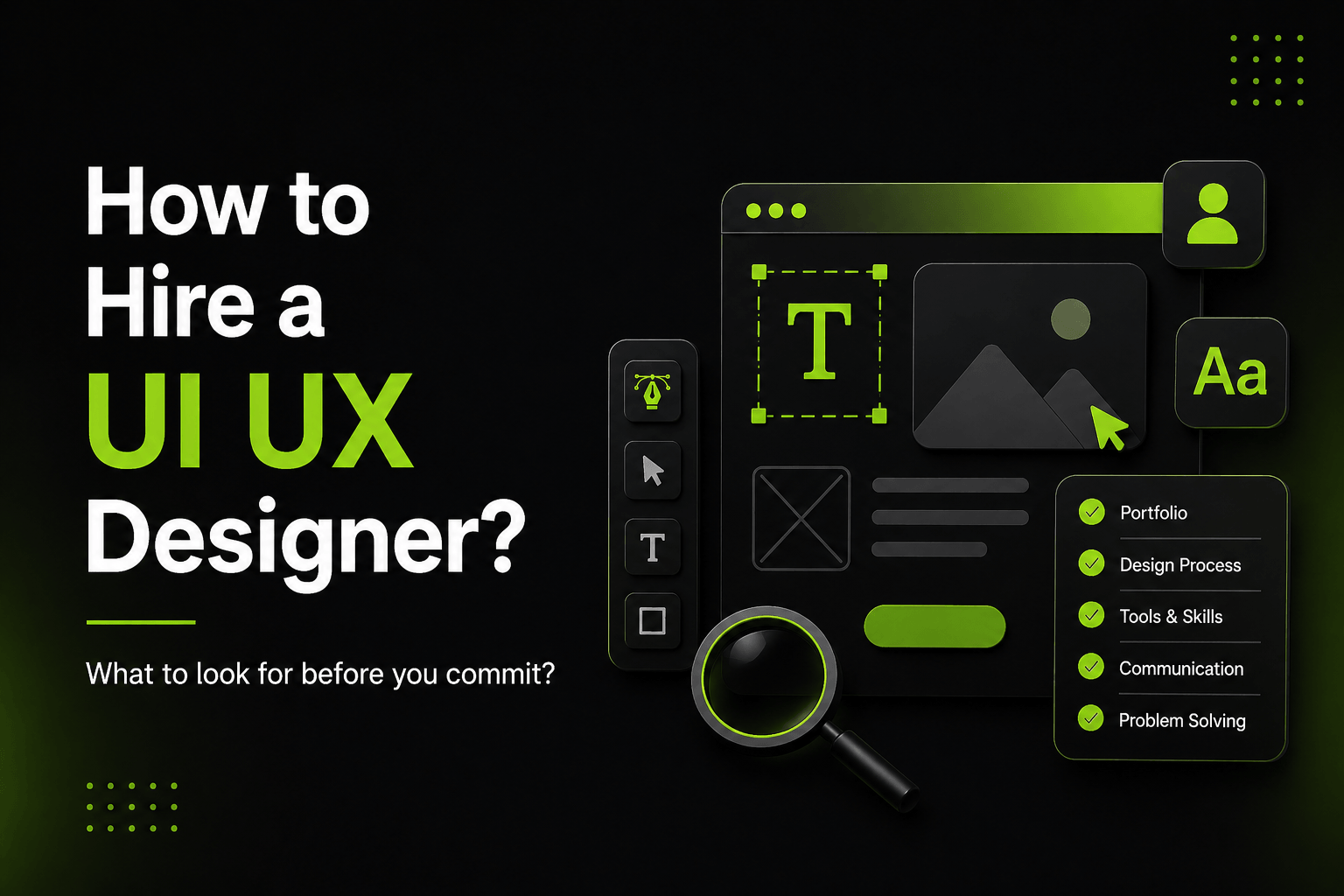
Hiring the right UI UX designer can be one of the best decisions you make for your digital product. Hiring the wrong one can cost you months of time and a budget you will not get back. The challenge is that most design portfolios look impressive. Understanding what is actually behind the work — the thinking, the process, the results — takes a more careful approach.
This guide gives you a clear framework for evaluating UI UX designers in Australia, knowing what questions to ask, and understanding how to choose between a freelancer and a professional UI UX design agency.
What Does a UI UX Designer Actually Do?
Before you start looking, it helps to understand what the role actually covers. UX — user experience — is about how a product works. It covers user research, journey mapping, information architecture and the logic behind how screens and flows are structured. UI — user interface — is about how the product looks and feels visually: the components, typography, colour, spacing and interactions.
In practice, many designers work across both. A UI UX designer researches how users think and behave, maps how they should move through your product, and then designs the visual interface that brings that logic to life. The best designers are strong in both areas and understand how visual decisions directly affect user behaviour and conversion.
What to Look For in a UI UX Designer?
There are four things that genuinely separate good UI UX designers from average ones.
Process over polish
A strong designer will show you the thinking behind their work — not just the finished screens. Look for case studies that explain the user research they conducted, the problems they identified, the design decisions they made, and the outcomes those decisions produced. A portfolio full of beautiful visuals with no explanation of the process is a warning sign.
Measurable results
The best designers can point to specific outcomes their work delivered — reduced bounce rates, improved conversion, higher task completion. If a designer has never measured the impact of their work, they may not be designing with business outcomes in mind. Good UX design directly affects your conversion rate.
Audience understanding
Good UX design is audience-specific. A designer who has worked in your industry or with a similar user group will produce better results faster than a generalist learning your context from scratch. During interviews, ask how they would approach understanding your specific users.
Communication and collaboration
Design is collaborative. A designer who cannot explain their thinking clearly, receive feedback constructively, or work alongside developers will slow everything down. How they explain their work during an interview is a direct preview of what working with them will be like.
Questions to Ask Before You Hire
These questions will quickly reveal whether a designer has genuine depth or surface-level skills.
- Can you walk me through a project where your design directly improved a business result?
- How do you approach user research at the start of a new project?
- What tools do you use for wireframing, prototyping and final design — and why?
- How do you handle situations where your recommendation conflicts with what the client wants?
- How do you collaborate with developers during handover?
- What does your usability testing process look like?
A designer who answers these questions clearly and with real examples is worth taking seriously. Vague answers suggest limited practical experience.
Red Flags to Watch For
Watch for these patterns when evaluating any UI UX designer.
- Portfolios showing only final visuals with no explanation of UX thinking or process
- Inability to describe how they conduct user research or usability testing
- No examples of iterating on a design based on real user feedback
- Overconfidence in their own aesthetic preferences over evidence from users
- No knowledge of accessibility standards or responsive design principles
None of these is automatically disqualifying in isolation, but each one is worth exploring further before you commit budget.
Freelancer vs UI UX Design Agency — Which Is Right for Your Project?
This decision depends on your scope, timeline and how much risk you can manage.
Hiring a freelance UI UX designer works well for smaller, well-defined projects with a clear brief. The cost is usually lower and the relationship more direct. The risk is availability, consistency and accountability if things go wrong.
A UI UX design agency in Australia brings a team — researchers, strategists and designers — and a structured process. For startups, complex projects, products in development, or businesses that need ongoing design support, an agency provides more reliability and depth. For anything involving a customer-facing product that needs to perform commercially, working with an experienced design agency is usually the lower-risk choice.
How UX Design Connects to Web Design and Development?
UX design does not exist in isolation. It works best when it is tightly integrated with web design and web development from the start of a project. When UX, visual design and development are aligned from day one, you avoid the common problem of designs that look great in Figma but are difficult or expensive to build.
The best results come from teams where the UX designer, web designer and developer collaborate throughout the process — not in sequence. If you are looking for end-to-end digital product delivery, consider a partner who offers all three capabilities.
The Best Hire Is One Who Understands Your Users
At its core, hiring a great UI UX designer is about finding someone who is genuinely curious about your users and rigorous about their process. Beautiful design without user insight is decoration. The best designers treat your product as a problem to solve for real people — and they have the methods and mindset to do it properly.
Take your time. Review case studies carefully. Ask the hard questions. And prioritise designers who can demonstrate that their work has made a measurable difference. That is the standard worth holding.
Frequently Asked Questions
Q1. How much does it cost to hire a UI UX designer in Australia?
Costs vary depending on scope and experience. Freelance UI UX designers in Australia typically charge between $80 and $180 per hour. A UI UX design agency will price by project, with most mid-complexity projects ranging from $5,000 to $30,000 depending on the deliverables. Discovery, wireframing, prototyping and testing all affect the final cost.
Q2. What is the difference between a UI designer and a UX designer?
A UX designer focuses on the overall user experience — the research, the logic of how a product is structured, and whether it is easy to use. A UI designer focuses on the visual elements — the layout, colour, typography and components. Many designers work across both, but the skills and methods are different.
Q3. Do I need a UX designer if I already have a web designer?
Yes, in most cases. Web designers typically focus on visual appearance. UX designers focus on how the product works for real users. Without UX input, you risk building something that looks good but is confusing or frustrating to use. The two roles complement each other and are most effective when working together.
Q4. What deliverables should I expect from a UI UX designer?
Common deliverables include user research reports, user journey maps, wireframes, interactive prototypes, usability testing results, final UI design files, design system documentation, and developer handover specs. The exact deliverables depend on your project scope and the stage of the engagement.
Q5. How long does a UI UX design project take?
A simple website UX project might take two to four weeks. A complex app or product design project involving multiple rounds of research, wireframing, prototyping and testing can take two to six months. Timelines depend on the scope of the brief, the number of review cycles, and how quickly decisions are made on the client side.