UX Design for Startups — Why It Matters More Than Most Founders Realise
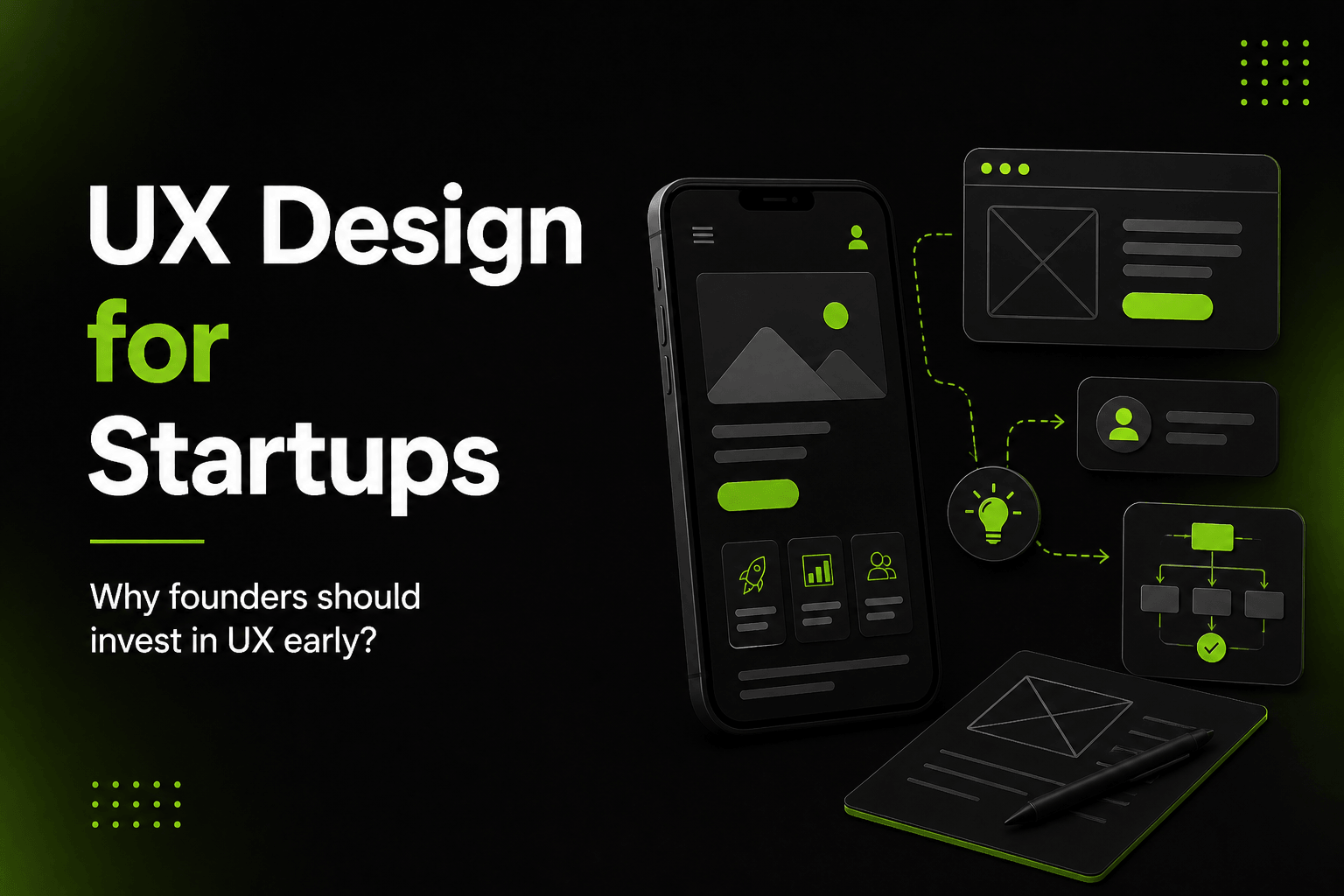
Most early-stage startups treat design as something they will get to later. They focus on getting features built and a product live as fast as possible. Design gets whatever is left over — which is usually not much.
This approach makes sense in theory. Resources are limited and speed matters. But it creates a problem that compounds fast. A product that is confusing or frustrating to use does not get better traction just because it has more features. Users do not forgive poor experiences. They simply move on.
The startups that gain traction fastest are almost always the ones that invested in understanding their users before building for them. UX design for startups is not about making things look polished. It is about making things work in a way real users can understand — and want to keep using.
What UX Design Means for an Early-Stage Product?
For a startup, UX design is primarily about two things. First, making sure you are building the right thing. Second, making sure you are building it in a way users can actually navigate and use.
The first part is often called product validation. Before writing a line of code, UX designers use research methods — user interviews, surveys, competitor analysis — to understand what problems exist and whether your proposed solution actually addresses them. This is how you avoid spending months building a product nobody wants.
The second part is about usability. How do users move through your product? Where do they get confused? What causes them to drop off? Wireframing, prototyping and usability testing give you the answers to these questions before you have committed to a full build.
MVP Design — How to Get It Right?
An MVP — minimum viable product — is the simplest version of your product that lets you test your core assumptions with real users. Good MVP design is not about looking finished. It is about being functional and clear enough that you can learn from real user interactions.
Here is where many startups go wrong. They either invest too little in MVP design — producing something so rough that users cannot meaningfully engage with it — or too much, polishing every pixel before validating the core concept. The goal is the middle ground: clean, usable and testable.
A good UI UX designer with startup experience will push back on scope that is unnecessary at the MVP stage and push forward on usability improvements that will genuinely affect your ability to learn. That balance is hard to find without someone who has done it before. Good MVP UX decisions also have a direct impact on how UX design affects conversion rates once your product launches and real users start flowing through it.
User Research on a Startup Budget
Proper user research does not require a large budget. It requires the right methods and the discipline to actually use them. Even five to ten user interviews at the early stage will surface patterns that fundamentally change how you design your product. Watching real users interact with a prototype for thirty minutes teaches you more than weeks of internal discussion.
The most valuable research methods for early-stage startups are:
- User interviews — one-on-one conversations to understand your target users' real problems and expectations
- Prototype testing — showing users an early version and watching closely where they get confused
- Competitor analysis — understanding how similar products design for the same users
- Card sorting — a simple method to test whether your information architecture makes sense to real people
None of these require specialist tools or large teams. They require time, the right questions and a genuine willingness to hear things you did not expect.
Rapid Prototyping — Why It Changes Everything?
Rapid prototyping is one of the most valuable tools in a startup's UX toolkit. A prototype is a clickable simulation of your product — not a live product, but something real enough that users can interact with it and give you meaningful feedback. Modern design tools make it possible to build high-fidelity interactive prototypes in hours, not days.
The value is direct. You can test an entire user journey with real users before a single line of code is written. You can identify confusion points, validate key assumptions and refine the experience based on real feedback — all at a fraction of the cost of building and then fixing.
For startups, this is not a nice-to-have. It is one of the most efficient ways to reduce risk and accelerate learning. Teams that iterate quickly on prototypes reach product-market fit faster than those who build first and test later.
When Should a Startup Bring in a UX Designer?
Earlier than most founders think. The ideal time to involve a UX designer is before you have built anything — at the concept and research stage. This is when the impact of design thinking is highest and the cost of changes is lowest.
If that has already passed, the next best time is before your next significant build cycle. If you are planning a new feature set, redesigning a core flow, or moving from MVP to a more scalable product, bringing in a UX designer at the start of that process will produce far better outcomes than treating design as an afterthought.
UX Design and Your Broader Digital Product
UX design for startups does not exist in isolation. It connects directly to how your product is built, how it performs technically, and how it is perceived visually. Startups that treat design and development as separate tracks often end up with products that look different from how they were designed — or that perform poorly because no one considered the user experience impact of technical decisions.
The most successful digital products are built by teams where UX designers, visual designers and developers are aligned from the start. If you are building an app or web-based product, consider whether your development partner has strong UX capability or whether you need to bring that in separately.
UX Design as Long-Term Competitive Advantage
Once you have launched and reached early traction, UX design does not stop mattering. As your user base grows, so does its diversity. Workflows that felt intuitive to early adopters may confuse new users. Features that were clear at launch become ambiguous as the product grows more complex.
Ongoing usability testing, iterative design improvements and a strong design system are what separate products that stay simple and enjoyable as they scale from those that become cluttered and frustrating. Startups that continue to invest in UI and UX design services after launch retain users and grow through recommendation. As your product scales, knowing how to hire a UI UX designer for your growing product becomes one of the most valuable decisions you can make.
Frequently Asked Questions
Q1. How much does UX design cost for a startup?
UX design costs for startups vary by scope. A focused MVP UX project — covering user research, wireframing and a clickable prototype — typically costs between $3,000 and $12,000 depending on complexity. Full product design for a more complete application is higher. Many UI UX design agencies offer startup-friendly packages specifically for early-stage products.
Q2. Do startups really need UX design before building?
Yes — and the earlier the better. The cost of fixing a UX problem at the wireframe stage is a small fraction of what it costs to fix the same problem after the product is built. Startups that invest in UX research and prototyping before development consistently reach product-market fit faster and with less wasted resource.
Q3. What is MVP design in UX?
MVP design is the process of designing the minimum set of screens and flows needed to test your core product concept with real users. It focuses on usability and clarity rather than visual polish. The goal is to learn from real user behaviour as quickly and cheaply as possible — not to produce a finished product.
Q4. What is rapid prototyping in UX design?
Rapid prototyping means building a clickable, interactive simulation of your product using design tools like Figma — before any code is written. Users can navigate through it as if it were a real product. This allows you to test the user experience, identify problems and refine the design at a fraction of the cost of building and then fixing.
Q5. Should a startup hire a UX freelancer or a UX agency?
It depends on scope and risk tolerance. A freelance UX designer is lower cost and works well for focused, well-defined projects. A UI UX design agency provides a team, a structured process and more accountability — better suited for complex products or startups that need ongoing design support as they scale.