WordPress Web Design in Australia - Is It Still the Right Choice for Your Business in 2026?
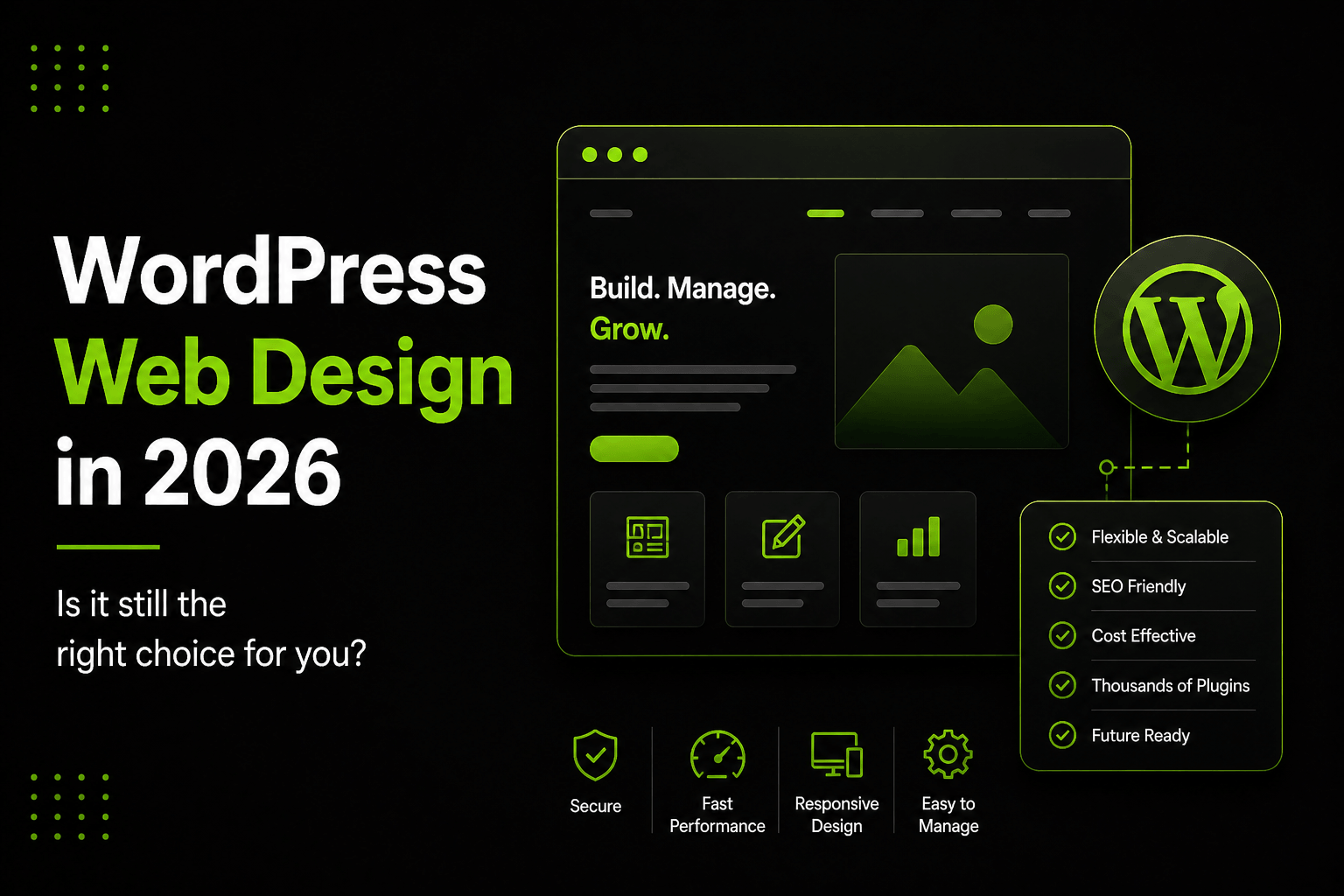
WordPress powers 40.8% of all websites on the internet (W3Techs). It has been the dominant web design platform for over a decade. But the web design landscape in 2026 is different from what it was in 2016 - and the question of whether WordPress web design is the right choice for your Australian business deserves a clear, honest answer.
This guide covers what WordPress web design actually involves, where it works well, where it has real limitations, what it costs in Australia, and how to decide whether WordPress or an alternative better suits your needs.
What Is WordPress Web Design?
WordPress web design means building your website on the WordPress content management system. WordPress provides the backend infrastructure - the database, the admin panel, the content management - while a theme controls the frontend visual design.
A professional WordPress web design project builds a custom theme specifically for your business. This is different from buying a premium theme and editing it within its constraints. A custom-built WordPress website has unique templates designed to your brand, using WordPress purely as the management layer underneath.
The result is a website that looks completely custom while allowing your team to update content, publish blog posts, manage pages and make changes without needing a developer for every edit. This makes WordPress web design in Australia one of the most practical options for businesses that want full content control without sacrificing design quality.
Where WordPress Web Design Works Well?
WordPress is genuinely excellent for a large category of Australian business websites. Understanding where it performs best helps you know when it is the right choice.
WordPress works very well for content-driven websites - businesses that publish regular blog posts, case studies, resources or news. The content management system is intuitive, well-documented and familiar to most marketing teams. New staff members can be trained quickly.
It works well for businesses that want to manage content actively without relying on a developer for every change. The WordPress admin interface is accessible and well-understood. The plugin ecosystem covers most standard functionality needs without requiring custom development every time.
- Marketing and corporate websites - WordPress handles most standard business website requirements effectively
- Content-rich websites - blogs, news sites, resource libraries and knowledge bases
- Portfolio websites - for agencies, consultants and creatives who update their work regularly
- Starter ecommerce - WooCommerce makes WordPress a capable platform for smaller online stores
- Projects with content management as a priority - non-technical teams can manage WordPress easily
For many Australian businesses, WordPress web design in Australia delivers an excellent combination of design quality, content flexibility and long-term maintainability at a reasonable cost.
Where WordPress Has Real Limitations?
WordPress is not the right choice for every project. Being clear about its limitations helps you make a better-informed decision.
Performance is the most consistent challenge with WordPress in 2026. A site with multiple active plugins - each adding its own scripts, styles and database queries - can become slow over time. Speed is both a user experience issue and an SEO issue. Keeping a WordPress site fast requires careful plugin management, quality hosting and ongoing optimisation work. This is not a fatal flaw, but it is a maintenance commitment.
Security is an ongoing concern. Because WordPress is so widely used, it is a constant target for automated attacks. Outdated plugins are the most common security vulnerability. A WordPress site needs regular updates, security monitoring and active management to stay protected.
For complex applications, non-standard content structures, deep system integrations or very high performance requirements, a custom-coded solution or headless CMS will usually outperform WordPress. The plugin-based approach that makes WordPress flexible for standard use cases becomes a liability when requirements go significantly beyond what the platform was designed for.
WordPress Web Design Cost in Australia
WordPress web design costs in Australia cover a wide range depending on customisation level, page count and functionality.
A custom WordPress theme design and development for a standard business website typically costs between $5,000 and $20,000 in Australia. This includes custom page templates, homepage design, responsive layouts across all devices, basic SEO structure, plugin configuration and a launch-ready deployment.
Ecommerce additions using WooCommerce add cost for product catalogue design, checkout flow, payment integration and product management - typically $3,000 to $10,000 on top of the base website cost depending on catalogue size and complexity.
Ongoing costs include quality hosting ($20 to $150 per month), premium plugin licences where required, security monitoring and regular maintenance. A well-maintained WordPress site on good hosting runs reliably, but that maintenance is not optional - it is a real ongoing cost to factor into your budget.
Reviewing web design packages from professional agencies will give you a clearer sense of how WordPress project costs are structured and what is included at each level of investment.
What a Professional WordPress Web Design Process Looks Like?
The quality of a WordPress website depends almost entirely on the quality of the design and development process - not the platform itself. A poorly built WordPress site is not a WordPress problem. It is a process and decision-making problem.
A professional WordPress web design process starts with discovery and strategy - understanding goals, audience and content requirements before any design begins. Custom page templates are designed to your brand specifications, not modified from an existing theme. Development follows WordPress coding standards. Plugins are selected deliberately - only what is genuinely needed, from reputable developers with maintained codebases.
Before launch, the site is thoroughly tested across devices and browsers. Speed is measured and optimised. Security configurations are confirmed. A staging environment is used so updates can be tested before going live.
WordPress or an Alternative - How to Decide?
For most standard Australian business websites, WordPress web design in Australia is the right choice. It is the most mature, most widely supported CMS platform available. The developer community is large, the ecosystem is deep, and for content-driven websites the total cost of ownership over three years is hard to beat.
Choose an alternative when performance requirements are very high, when your content model is structurally non-standard, when your application logic goes significantly beyond what plugins can support cleanly, or when past WordPress experiences have produced ongoing maintenance problems that have not been resolvable.
A good web design company will advise you honestly on which platform suits your specific project - not default to whatever they prefer building. Ask directly: why are you recommending WordPress for my project and what would make you recommend something different?
Frequently Asked Questions
Q1. Is WordPress still a good choice for web design in 2026?
Yes, for most standard business websites. WordPress is actively maintained, widely supported and has a deep ecosystem of developers and plugins. It is the right choice for content-driven websites, corporate marketing sites and smaller ecommerce projects. It becomes less suitable for high-performance applications, very complex custom functionality or projects where plugin dependencies create more problems than they solve.
Q2. How much does WordPress web design cost in Australia?
A custom WordPress web design project in Australia typically costs between $5,000 and $20,000 for a standard business website. WooCommerce ecommerce additions typically add $3,000 to $10,000 depending on complexity. Ongoing costs include hosting ($20 to $150 per month), plugin licences and regular maintenance. Plan for ongoing maintenance as a real operational cost - not an optional extra.
Q3. What is the difference between a custom WordPress design and a premium theme?
A premium WordPress theme is a pre-built design framework you customise within its structural and visual constraints. A custom WordPress design builds unique page templates from scratch, specifically for your brand. Custom design produces a genuinely unique website with no visual overlap with other sites using the same theme. It costs more but produces a better brand result and typically performs better over time.
Q4. How do I keep my WordPress website secure?
Keep WordPress core, themes and all plugins updated as soon as updates are available. Use a quality security plugin and enable two-factor authentication on admin accounts. Choose a reliable hosting provider with server-level security and regular backups. Limit installed plugins to only what you actively use. These steps eliminate most common WordPress security vulnerabilities.
Q5. Can WordPress handle ecommerce?
Yes. WooCommerce is a capable ecommerce platform for small to medium-sized online stores. It handles products, shopping carts, payment gateways, shipping and order management effectively. For large catalogues, very high traffic or complex ecommerce requirements, a dedicated platform like Shopify or a custom-built solution may be more suitable. A professional web design company will advise you on the right platform for your specific ecommerce needs.