Custom Frontend Development in Australia: React, Next.js and What to Actually Expect?
Your website is the first thing most customers see. And in 2026, the gap between a fast, custom-built frontend and a slow, template-based site is visible - immediately. Visitors feel it in the first two seconds. Search engines measure it constantly. And your conversion rate reflects it every single day.
More Australian businesses are choosing custom frontend development over WordPress themes and website builders - and for good reason. But the technology involved can be confusing. React, Next.js, TypeScript, Tailwind - what do these actually mean, and what should you expect if you hire a custom frontend development company in Australia?
This guide answers that question plainly. No jargon. Just a clear picture of what custom frontend development involves, what React and Next.js actually do, what the process looks like, and whether it is right for your business.
What Is Custom Frontend Development?
Frontend development is everything a user sees and interacts with in their browser. It is the visual interface - the layouts, buttons, navigation, animations, forms, and content - that sits between your users and your underlying systems. Custom frontend development means building this interface from the ground up, tailored to your specific business, rather than adapting a pre-made theme or template.
A custom-built frontend gives you complete control over performance, design, user experience, and business logic. Nothing is generic. Nothing is restricted by a theme's limitations. Every element is built for your specific users and your specific goals.
Why Australian Businesses Are Moving Away From Templates?
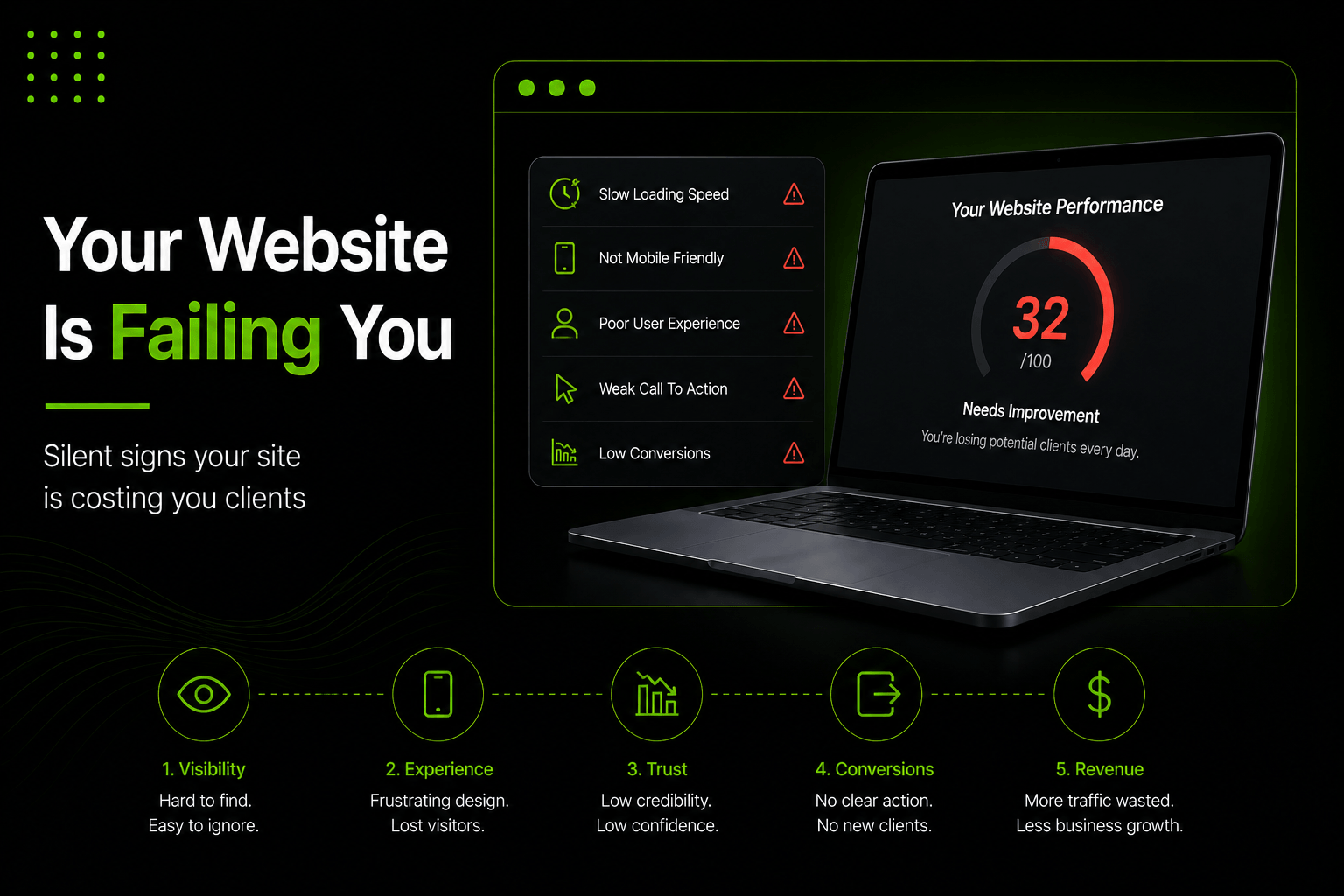
Website builders and WordPress themes remain popular for good reason - they are fast to launch and inexpensive to start. But they have structural limitations that become increasingly costly as a business grows.
- Performance ceilings: Theme-based sites accumulate plugins and unused CSS that drag load times down. Page speed is a direct SEO ranking factor and a conversion rate driver - and template sites frequently hit a ceiling that cannot be solved without a rebuild.
- Design constraints: A template gives you someone else's design logic. Customising it beyond its intended structure typically requires workarounds that create more problems than they solve.
- Scalability limits: As your content, features, and integrations grow, template-based systems become increasingly difficult to maintain and extend without bloat.
- SEO limitations: Custom-built sites with clean code structures, proper semantic HTML, and server-side rendering outperform template sites on Core Web Vitals - Google's primary performance scoring system.
For Australian businesses that want their website to be a genuine growth asset - not just a brochure - custom frontend development is typically the higher-returning investment over a 3 to 5 year horizon.
React: The Foundation of Modern Custom Frontends
React is the most widely used JavaScript library for building user interfaces in 2026. Created by Meta, it powers websites and web applications for some of the world's largest businesses - including Airbnb, Netflix, Atlassian, and thousands of Australian digital products.
React's core idea is component-based development. Instead of building one large web page, you build small, reusable components - a navigation bar, a product card, a contact form - and assemble them. Components can be reused across the site, updated independently, and tested in isolation. This makes React-built sites faster to develop, easier to maintain, and more consistent across every page.
In 2026, React 19 introduced Server Components - a significant advancement that allows parts of a React application to render on the server and send pre-built HTML to the browser. This combines the performance benefits of traditional server-rendered websites with the interactivity of modern single-page applications. The result is faster initial load times and better SEO performance.
What React Delivers for Your Business?
- Fast, interactive interfaces that respond instantly to user actions without full page reloads.
- Reusable components that ensure design and functionality consistency across every page.
- A large, mature ecosystem of pre-built libraries for common needs - payments, authentication, maps, analytics.
- The largest frontend developer talent pool in Australia, making your project easier to maintain long-term.
- Server Components in React 19 - better performance and SEO from the same codebase.
Next.js: The Production Standard for React in 2026
Next.js is a framework built on top of React that adds the infrastructure a production website needs - routing, server-side rendering, static site generation, image optimisation, API routes, and deployment tooling. In 2026, Next.js has become the default choice for many Australian custom frontend development teams building production React applications.
The reason Next.js dominates is simple: it solves the hard problems that raw React does not address out of the box. Where a basic React app requires significant configuration to achieve good SEO and performance, Next.js delivers both by default.
What Next.js Specifically Delivers?
- Server-side rendering (SSR) - pages are rendered on the server before being sent to the browser, giving fast load times and full crawlability for Google.
- Static site generation (SSG) - pages are pre-built at deployment time for maximum speed, ideal for content-heavy marketing sites.
- Incremental static regeneration (ISR) - pages update automatically in the background without requiring a full rebuild.
- Built-in image optimisation - every image is automatically resized, compressed, and served in next-generation formats like WebP.
- File-based routing - clean, logical URL structures without configuration overhead.
- API routes - lightweight backend functionality built directly into the same codebase.
The : What Goes With React and Next.js
A custom frontend development project in Australia typically uses React and Next.js alongside a set of complementary technologies. Here is what a modern frontend stack looks like in 2026.

Full Technology Stack
TypeScript deserves particular mention. It became the most-used language on GitHub by contributor count in 2025, reflecting how widely it has been adopted as the professional standard for frontend development.
TypeScript adds static type checking to JavaScript - catching errors during development rather than after deployment. For Australian businesses building long-lived digital products, TypeScript makes codebases significantly more maintainable.
What Does Custom Frontend Development Actually Cost in Australia?
Custom frontend development in Australia is typically quoted as part of a full web development project rather than as a standalone service. Australian agency hourly rates for senior frontend developers range from $150 to $200 AUD per hour. Here is how typical project costs break down.

What Does Custom Frontend Development Actually Cost in Australia
These are frontend costs only. If your project also requires custom backend development, API design, or infrastructure work, budget accordingly. Always ask for a scoped proposal that separates frontend, backend, and infrastructure costs.
What to Expect From a Custom Frontend Development Project?
Understanding the development process helps you prepare, ask better questions, and get a better result.
Phase 1: Discovery and Technical Planning (1–2 weeks)
A good frontend development project starts with discovery - understanding your users, your content structure, your integration requirements, and your performance goals. The team defines the component architecture, chooses the right rendering strategy (SSR, SSG, or ISR), selects the technology stack, and sets up the project infrastructure. This phase prevents expensive mid-project changes.
Phase 2: Design and Component Development (3–8 weeks)
Once designs are approved, developers build the component library - starting with the foundational elements (typography, colours, buttons, forms) and working outward to full page layouts. Components are built to be reusable, responsive across all screen sizes, and accessible by default. Modern Next.js projects use Storybook or similar tools to develop and test components in isolation before assembling them into full pages.
Phase 3: Integration and Content Connection (1–3 weeks)
The frontend connects to your CMS, APIs, payment systems, and any other backend services. This is where the real complexity often lives - making sure data flows correctly between your frontend and the systems behind it. Authentication, form submissions, content previewing, and e-commerce functionality are all wired up in this phase.
Phase 4: Performance Optimisation and QA (1–2 weeks)
Before launch, a professional team runs Core Web Vitals testing, cross-browser and cross-device QA, accessibility auditing, and load testing. The goal is a Lighthouse performance score of 90 or above - the threshold where Google's ranking algorithms reward performance most significantly.
Frequently Asked Questions
Q 1. Do I need React and Next.js or will WordPress work for my project?
WordPress is the right choice for many Australian businesses - particularly those with content-heavy sites where non-technical team members need to manage content daily, and where a custom frontend's cost is not justified. React and Next.js make most sense for web applications, complex interactive experiences, SaaS products, high-traffic marketing sites where performance is critical, and businesses that need a custom user experience their template cannot deliver.
Q 2. How long does a custom frontend development project take in Australia?
A typical custom Next.js marketing website takes 6 to 10 weeks from design approval to launch. A web application with custom React frontend takes 10 to 20 weeks depending on complexity. The biggest variables are scope clarity at the start, the design approval process, and integration complexity with backend systems.
Q 3. What is the difference between a frontend developer and a full-stack developer?
A frontend developer specialises in the user interface - everything the user sees and interacts with in the browser. A full-stack developer works across both frontend and backend (databases, APIs, server infrastructure). Custom frontend development projects benefit from specialists who deeply understand React, Next.js, performance optimisation, and user experience - skills that generalist developers sometimes spread thin.
Q 4. Will a custom Next.js site rank better on Google than a WordPress site?
A well-built Next.js site typically outperforms a standard WordPress site on Core Web Vitals - the performance metrics Google uses as ranking signals. Server-side rendering, automatic image optimisation, and clean code structures give Next.js sites structural advantages. However, WordPress with a well-optimised theme can also achieve strong performance. The bigger SEO factors - content quality, backlinks, and topical authority - outweigh platform choice for most Australian businesses.
Ready to explore custom frontend development for your Australian business? Ziff Digital builds React and Next.js products that perform as well as they look.