How to Build a Social Media Strategy That Actually Grows Your Australian Business?
Here is the uncomfortable truth about most Australian businesses on social media: they have a presence, not a strategy. They post when they remember to, share content that feels right in the moment, and measure success by whether the last post got a few likes. And then they wonder why social media is not generating leads or revenue.
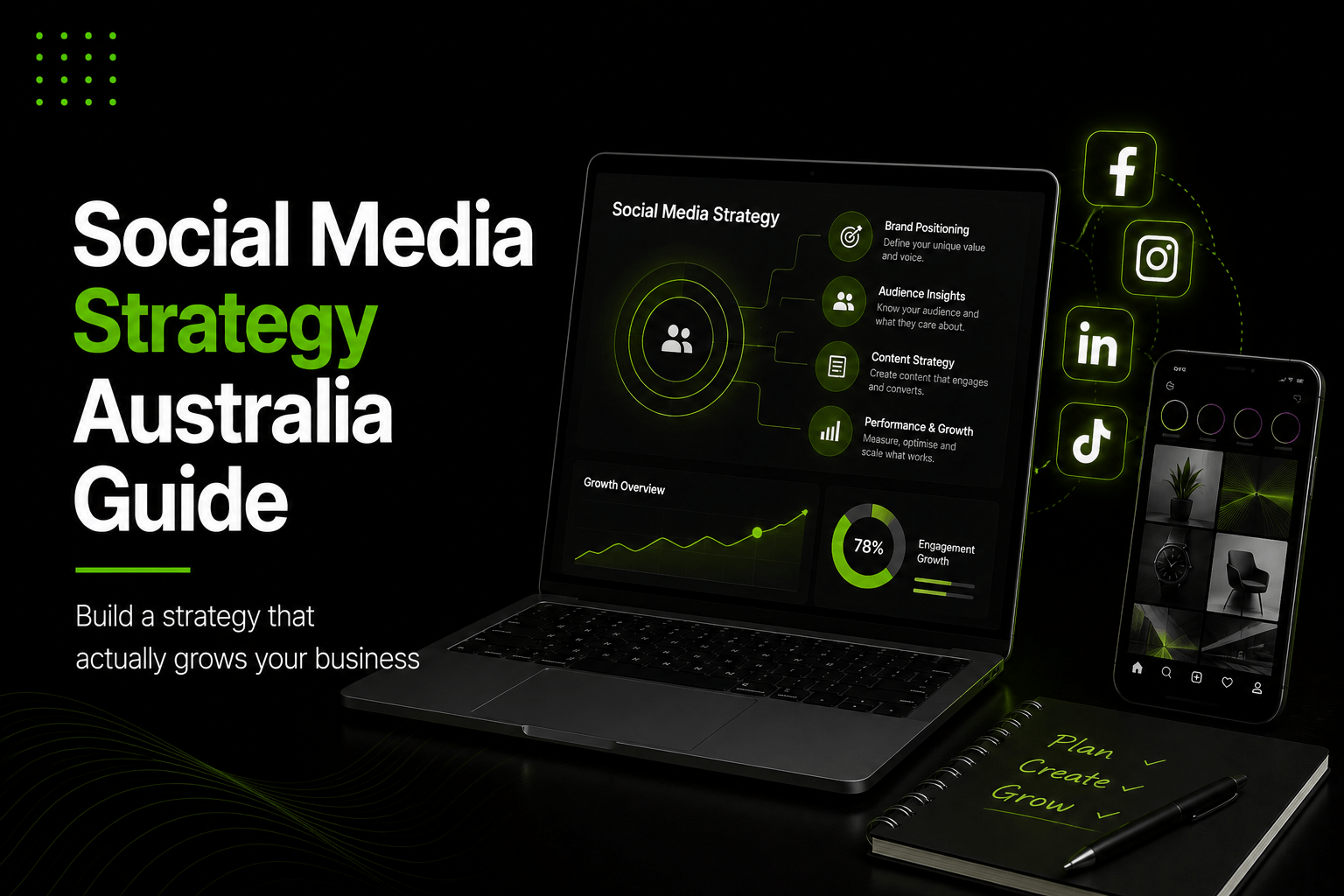
A social media strategy is not a content calendar. It is not a posting schedule. It is a documented plan that connects every piece of content and every campaign back to a specific business goal - and gives your team a clear framework for what to create, where to publish it, and how to know if it is working.
This guide walks you through how to build one. Not a generic template you fill in once and forget, but a working strategy that actually drives growth for your Australian business.
Step 1: Define What Social Media Success Looks Like for Your Business
Before you decide what to post or which platforms to use, you need to define what social media is supposed to achieve for your business. This sounds obvious. Most businesses skip it entirely - and then have no way of knowing whether their social media activity is working.
Connect Social Media Goals to Business Goals
Social media goals should be tied directly to business outcomes - not platform metrics. Here are examples of the translation:

Connect Social Media Goals to Business Goals
🔑 Pick one or two primary goals for your social media strategy. Businesses that try to achieve everything at once - awareness, leads, engagement, sales - achieve nothing consistently. Focus produces better results than spreading effort thin across every objective.
Step 2: Know Your Audience Before You Create a Single Post
The most common reason social media content fails to generate engagement or leads is that it is created for the brand - not for the audience. If you do not deeply understand who you are trying to reach, you cannot create content they care about.
Build an Audience Profile
For each target audience segment, document: who they are (demographics, location, profession), what platforms they use and when, what problems or desires they bring to social media, what type of content they engage with, and what would make them trust your brand enough to enquire or buy. Your audience profile does not need to be a lengthy document. It needs to be specific enough that every person creating content for your brand can use it to make decisions about what to create.
Use Data, Not Assumptions
Look at your existing audience data before making assumptions. Your Instagram and Facebook Insights show you who currently follows and engages with your content - age, gender, location, active times. Google Analytics shows you which social platforms are already sending traffic to your website. Your existing customer list tells you who actually buys. Start with data from your real audience before building a targeting strategy.
Step 3: Choose the Right Platforms for Your Australian Business
Not every social media platform is right for every business. Trying to maintain a professional presence across five platforms with a limited team and budget produces mediocre results everywhere. Choose the platforms where your specific audience is most active and most receptive to your type of content.

Choose the Right Platforms for Your Australian Business
💡 Start with one or two platforms and do them properly before expanding. A single well-managed Instagram account with consistent quality content will outperform five mediocre accounts across every platform.
Step 4: Plan Your Content Strategy
A content strategy is the framework that guides what you create and publish. It answers: what topics will we cover, in what formats, how often, and what do we want each piece of content to do?
Content Pillars - The Foundation of Consistent Content
Content pillars are the 3 to 5 core topics your brand will consistently create content around. They should align with your audience's interests, your business expertise, and your commercial goals. For example, a Ziff Digital might use: digital marketing tips, business growth strategy, behind-the-scenes agency life, client success stories, and industry news. Every piece of content you publish fits into one of these pillars - so your feed tells a coherent brand story rather than a random collection of posts.
Content Mix - Balance Education, Entertainment and Promotion
A common mistake Australian businesses make is posting only promotional content - offers, product announcements, service descriptions. Promotional content is important but it performs best when it sits in a feed that also educates, entertains, and builds trust. A useful starting ratio: 60 percent educational or entertaining content, 20 percent social proof and community content, and 20 percent promotional content with a clear call to action.
Content Formats - Match Format to Platform
Reels and short-form video consistently reach the widest audience on Instagram and Facebook. Carousels generate the most saves and shares on Instagram. Text-based posts with strong hooks perform well on LinkedIn. Stories are best for real-time, behind-the-scenes content and driving direct responses. Plan your content format mix around where each piece of content will be published - not just what is easiest to create.
Step 5: Build a Content Calendar
A content calendar transforms your strategy from a document into a schedule. It is the operational layer that ensures content actually gets created and published consistently - the most important single factor in social media growth.
What Your Content Calendar Should Include?
- Publication date and time for each post
- Platform the post will be published on
- Content pillar the post belongs to
- Format: video, image, carousel, story, reel
- Caption draft and any hashtag strategy
- Link or CTA (if applicable)
- Status: draft, in review, scheduled, published
Plan at least 2 to 4 weeks ahead. This gives you buffer time for content production, approval, and scheduling - and prevents the reactive, inconsistent posting that plagues most Australian businesses on social media.
Step 6: Set Up Your Measurement Framework
You cannot improve what you do not measure. Your measurement framework should connect social media activity directly to business outcomes - not just platform vanity metrics.
Metrics That Actually Matter
- Website traffic from social: Are people visiting your site from social media content?
- Lead volume: How many enquiries, form submissions, or DMs are coming from social?
- Revenue from social: For e-commerce, what revenue is attributable to social traffic or ads?
- Engagement rate: Is your content resonating with your existing audience?
- Reach and new account reach: Are you expanding beyond your existing audience?
Review your metrics monthly. Compare against the previous month and against your defined goals. Adjust your content mix, format, and frequency based on what the data shows - not what feels good or what is easy to produce.
Step 7: Integrate Organic and Paid Social
The most effective social media strategies in 2026 combine organic content with paid social advertising. Organic content builds community, brand trust, and long-term audience growth. Paid social advertising accelerates reach, drives leads, and fills the gaps organic content cannot.
Think of organic social as the foundation and paid social as the amplifier. Your organic content tests what messaging and creative resonates with your existing audience. Your best-performing organic posts become the starting point for paid campaigns - because you already know they work.
Frequently Asked Questions
Q. How often should Australian businesses post on social media?
Consistency matters more than frequency. Posting 3 times per week consistently for 6 months will outperform posting daily for 2 weeks and then going quiet. A realistic starting cadence for most Australian small businesses is 3 to 5 posts per week on one or two primary platforms, with daily story activity on Instagram if your audience is there.
Q. How long does it take to see results from social media strategy?
Organic social media growth typically takes 3 to 6 months of consistent, strategic activity to produce meaningful results - increased reach, engagement, and leads. Paid social advertising produces results faster, often within the first 2 to 4 weeks. Expect the first 60 to 90 days of a new strategy to be a learning phase - testing what content, formats, and messaging work for your specific audience.
Q. Should small businesses do social media themselves or hire an agency?
If you have the time, creative capability, and discipline to post consistently and track results - managing it in-house can work well for simple strategies. If social media is genuinely important to your business growth and you lack the time or expertise to do it properly, a social media marketing agency will almost always produce better results for the investment than inconsistent in-house management.
Ready to build a social media strategy that drives real growth for your Australian business? Talk to Ziff Digital's social media marketing team.