Paid Social Advertising in Australia: How to Run Facebook and Instagram Ads That Convert?
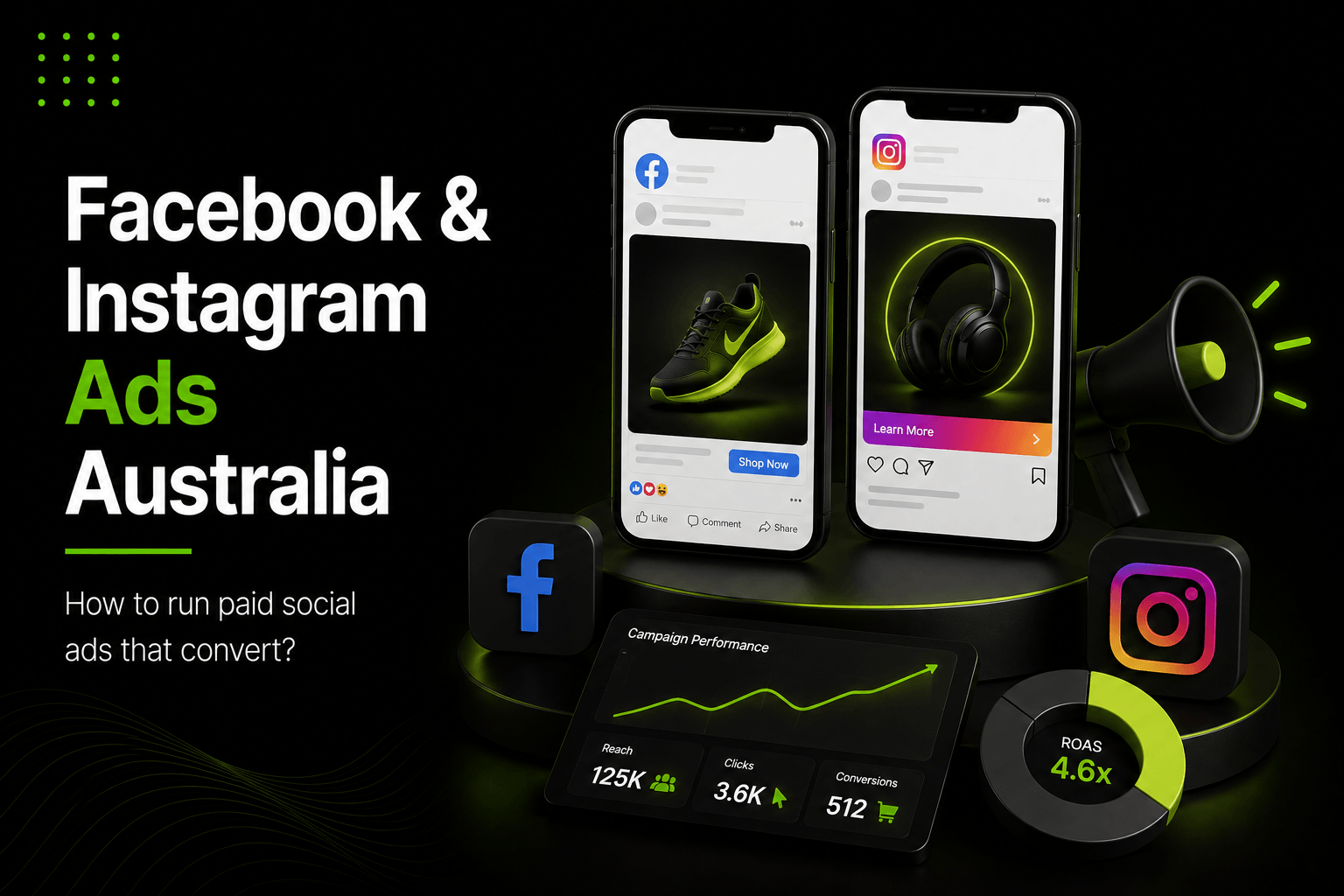
Around 16 million Australians are active on Facebook or Instagram every single month. That is a remarkable concentration of your potential customers in one place - and Facebook's advertising platform lets you reach them with a level of targeting precision that no other channel can match.
But paid social advertising is one of the most misunderstood marketing tools available to Australian businesses. Done well, it generates leads and sales predictably and at scale. Done poorly, it burns budget fast with nothing to show for it. The difference almost always comes down to strategy, targeting, and creative - not how much you spend.
This guide gives you a complete, practical framework for running Facebook and Instagram ads that convert - based on 2026 benchmarks, real Australian market data, and the strategies that consistently outperform.
What Is Paid Social Advertising and Why Does It Work?
Paid social advertising is the practice of paying Meta - the company that owns both Facebook and Instagram - to show your ads to a targeted audience beyond your existing followers. Unlike organic social media, paid ads reach people who have never heard of your business, targeting them based on demographics, interests, behaviours, and their previous interactions with your website or content.
The reason it works is data. Meta has access to billions of data points about its users - what they buy, what they click, what content they engage with, what life events they are experiencing. This lets Australian businesses get their message in front of people who genuinely match their ideal customer profile, at the moment they are most likely to act.
💡 Australian Meta CPM ran from about AUD $15.52 in July 2025 down to $12.92 in July 2026, with a median around $14.38 and a range of $9.63 to $21.73 depending on month and industry (Superads Australia benchmarks). Budget against the range rather than a single headline number - the month you launch matters more than most advertisers expect.
The 2026 Australian Facebook and Instagram Ads Benchmarks
Before you set a budget, you need to understand what realistic results look like in the Australian market. Here are the 2026 benchmarks to use as a planning baseline.

The 2026 Australian Facebook and Instagram Ads Benchmarks
⚠️ Australian cost per lead has been volatile rather than steadily rising - a year of declines, rebounds and a sharp spike. With margins tight, the businesses winning at paid social are those with better creative, sharper targeting and stronger landing pages, not those with the biggest budgets.
Step 1: Choose the Right Campaign Objective
The first decision you make when setting up a Facebook or Instagram ad campaign - the objective - determines how the algorithm optimises your delivery. Choosing the wrong objective is one of the most common and costly mistakes Australian advertisers make.
The Three Objective Categories
Awareness Objectives
Use when your goal is to get your brand seen by as many people as possible. Awareness campaigns are the cheapest to run but generate the least direct business. They are useful for new businesses, product launches, or retargeting audiences who need more exposure before they are ready to buy.
Consideration Objectives
Use when you want people to engage with your content or visit your website. Traffic objectives drive clicks to your site. Engagement objectives maximise reactions, comments, and shares. Video views objectives optimise for the people most likely to watch your video to completion.
Conversion Objectives
Use when you want leads, purchases, or specific actions taken on your website. Conversion campaigns cost 3 to 5 times more per click than traffic campaigns - but they optimise for people most likely to actually convert, not just click. For most Australian service and e-commerce businesses, conversion or lead generation objectives produce the best business results.
🔑 Match your objective to where your customer is in the buying journey. A cold audience seeing your ad for the first time rarely converts immediately. Build awareness first, then retarget warm audiences with conversion-focused ads.
Step 2: Targeting Your Australian Audience
Meta's targeting has evolved significantly in 2026. The platform's recommendation - and the data backs it up - is to use broader targeting with fewer restrictions, and let the algorithm find the right people based on your creative, offer, and conversion signals.
The Three Core Audience Types
Cold Audiences - Reaching New People
Cold audiences are people who have never heard of your business. In 2026, Meta's Advantage+ Audiences with a broad geographic filter consistently outperforms narrow interest stacking for most Australian advertisers. Give the algorithm a clear geographic boundary (your target cities or all of Australia) and let the creative and offer signal who your customer is.
Custom Audiences - Retargeting Warm Prospects
Custom audiences are built from people who have already interacted with your business - website visitors, video viewers, Instagram profile visitors, email subscribers, or past customers. These are your highest-value audiences because they already know who you are. Conversion rates from custom audiences typically outperform cold audiences by 3 to 5 times.
Lookalike Audiences - Scaling What Works
Lookalike audiences take your best customers - your buyer list or highest-value custom audience - and find Australian users who share the same characteristics. A 1 to 3 percent lookalike audience of your actual buyer list consistently outperforms interest-based targeting in mature campaigns. It is the most reliable scaling tool available in the Meta ad ecosystem.
Step 3:
The format you choose affects your cost, your reach, and your conversion rate. Here is how the main formats perform for Australian businesses in 2026.

Choose the Right Ad Format
💡 Short-form video consistently outperforms static images in Australia in 2026. If your business can produce even basic 15 to 30 second videos - a phone-recorded testimonial, a before and after, a product demo - test video creative before investing in polished static ads.
Step 4: Create Ad Creative That Stops the Scroll
Your targeting gets your ad in front of the right person. Your creative determines whether they stop scrolling and act. In a feed full of content competing for attention, most ads are ignored in under two seconds.
The Hook - The First 3 Seconds
The first three seconds of a video or the first line of a static ad determines whether someone keeps watching or scrolls past. The hook must immediately address something your audience cares about - a problem they have, a result they want, or a question they are already asking. 'Want more leads for your Sydney trade business?' works. 'We are a leading digital agency' does not.
The Offer - Make It Worth Acting On
Your ad must communicate a clear, compelling offer. Not 'contact us to learn more' - but a specific reason to act right now. A free audit. A limited-time discount. A downloadable guide. A free strategy session. The more specific and valuable the offer, the higher your conversion rate from click to lead.
Social Proof - Build Trust Instantly
Australian consumers are sceptical by nature. Including a customer review, a case study result, a number of clients served, or a recognisable brand logo in your ad creative significantly increases trust and conversion rates - especially for cold audiences who have never heard of your business.
Step 5: Set Up Tracking Properly Before You Spend a Dollar
The Meta Pixel and Conversions API (CAPI) together are the foundation of effective paid social advertising. Without proper tracking, you cannot measure results, optimise campaigns, or build custom audiences. Setting up both before your campaign goes live is non-negotiable.
- Meta Pixel: A snippet of code installed on your website that tracks visitor actions - page views, add to carts, form submissions, purchases
- Conversions API (CAPI): A server-side signal that supplements the Pixel - critical since iOS 14 privacy changes reduced browser-based tracking accuracy
- Using Pixel and CAPI together gives the most complete data picture and significantly improves Meta's ability to optimise your campaigns
- Set up custom conversions for your most important actions - form submissions, phone calls, purchases - so you can measure actual business outcomes
Step 6: Budget, Launch and Optimise
Start with a test budget that gives the algorithm enough data to learn. For most Australian businesses, this means a minimum of AUD $30 to $50 per day per ad set during the initial learning phase, which typically lasts 7 to 14 days.
During the learning phase, resist the urge to make changes. Editing your campaign resets the learning phase. Let the algorithm gather enough conversion data - Meta recommends 50 conversion events per week per ad set for stable optimisation - before drawing conclusions or making changes.
What to Monitor?
- CTR (click-through rate): Under 1% suggests creative is not resonating - test new hooks
- CPL (cost per lead): Compare against your industry benchmark - if above 2x the benchmark, diagnose creative or targeting
- ROAS (return on ad spend): For e-commerce, a mature campaign below 2x consistently needs creative or targeting diagnosis
- Frequency: Once your frequency exceeds 3–4, your audience is seeing the same ad too often - refresh creative or expand audience
Frequently Asked Questions
Q. How much should an Australian business spend on Facebook ads per month?
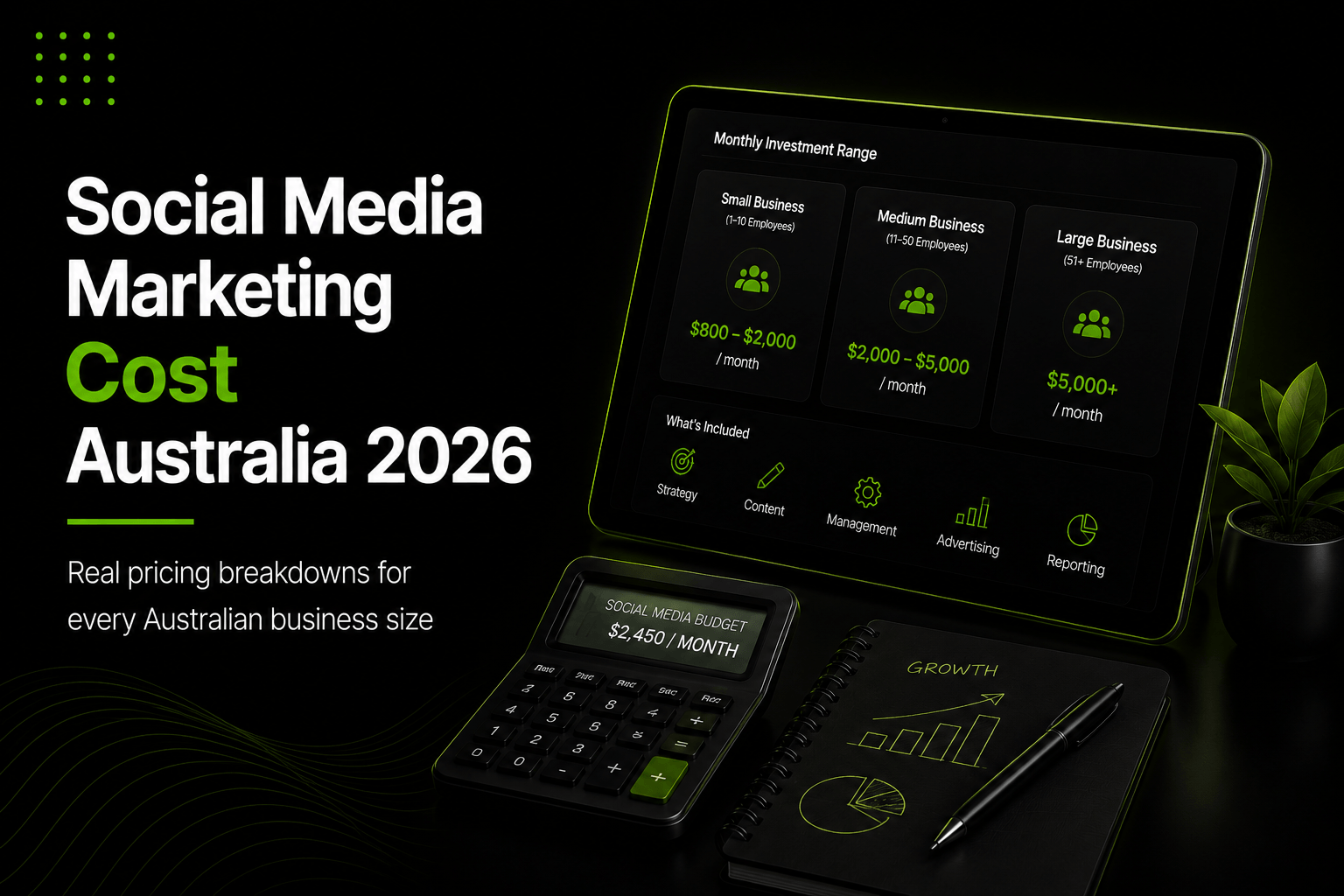
A useful starting point for most Australian small businesses is AUD $1,500 to $3,000 per month in ad spend - enough to generate meaningful data across one or two campaigns without overcommitting before results are validated. Add management fees if using an agency. Scale budget only after demonstrating a positive return on initial spend.
Q. Are Facebook ads or Instagram ads better for Australian businesses?
Both platforms run through Meta's ad manager and share the same targeting infrastructure. Facebook typically performs better for older demographics and lead generation. Instagram performs better for visual products, lifestyle brands, and younger demographics. Most Australian campaigns run across both simultaneously using Meta's Advantage+ placements, letting the algorithm allocate budget to wherever performance is strongest.
Q. How long does it take for Facebook ads to produce results in Australia?
Paid social advertising campaigns typically show early signals within the first 7 days. Meaningful optimisation data usually requires 14 to 21 days of consistent running. Full campaign maturity - where the algorithm has learned your best-converting audiences and creative - takes 4 to 6 weeks. Expect the first month to be a learning phase, not a revenue phase.
Q. What is the most common reason Facebook ads fail for Australian businesses?
The most common reasons are a weak or vague offer that does not give people a compelling reason to act, targeting that is too narrow and prevents the algorithm from optimising, creative that does not stop the scroll in the first three seconds, and landing pages that are slow or poorly designed and lose conversions after the click. All four need to work together for paid social to produce consistent results.
Need expert paid social advertising management for your Australian business? Talk to Ziff Digital - we build and manage Facebook and Instagram campaigns that generate real, measurable results.