What Are AI Models and How Do Businesses Use Them to Automate Marketing and Content?
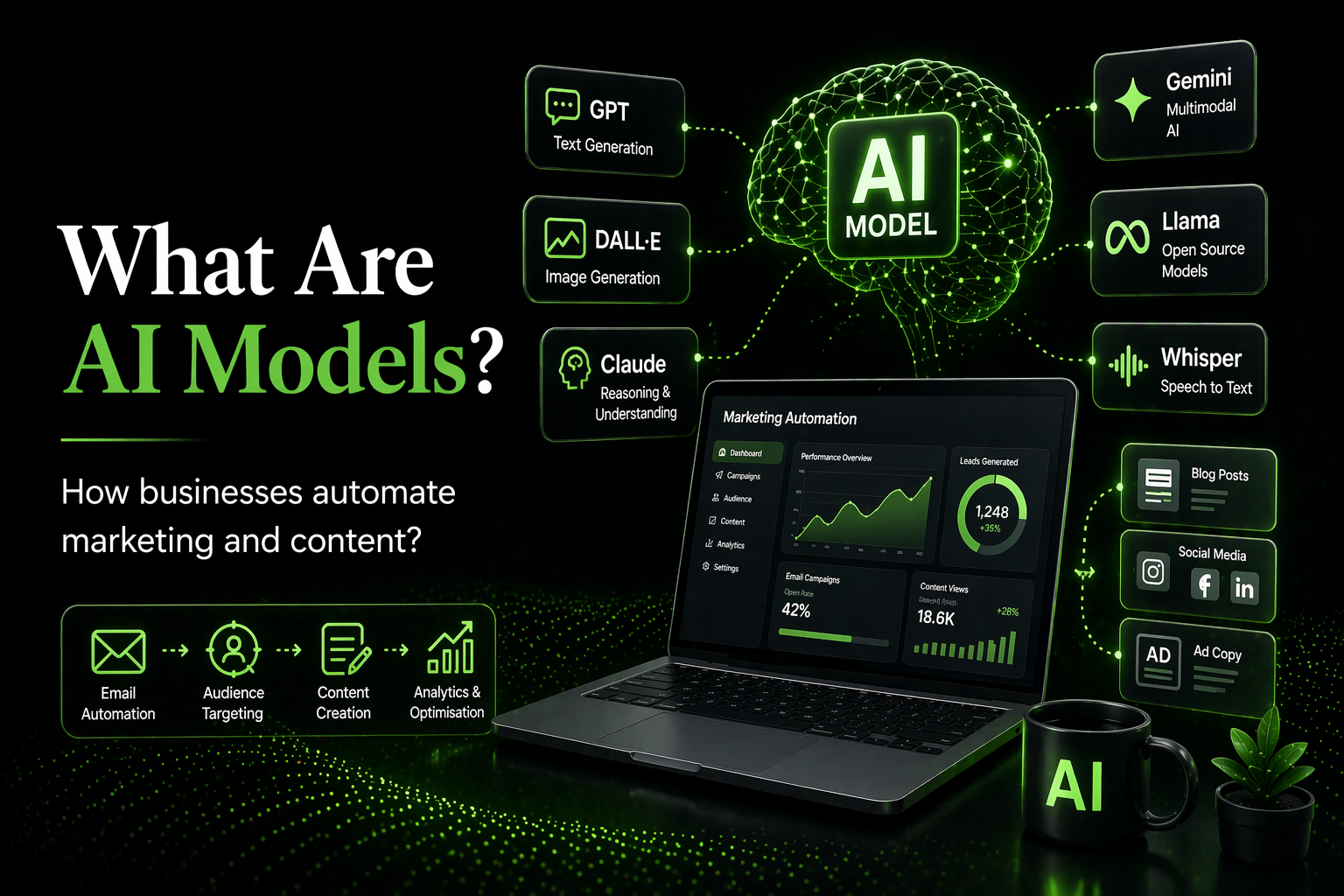
What Are AI Models?
An AI model is a system that has been trained on data to perform a specific task. It learns by processing large amounts of examples — text, images, numbers, or other inputs — and identifying patterns within that data. Once trained, the model can apply what it has learned to new inputs and produce outputs based on that training.
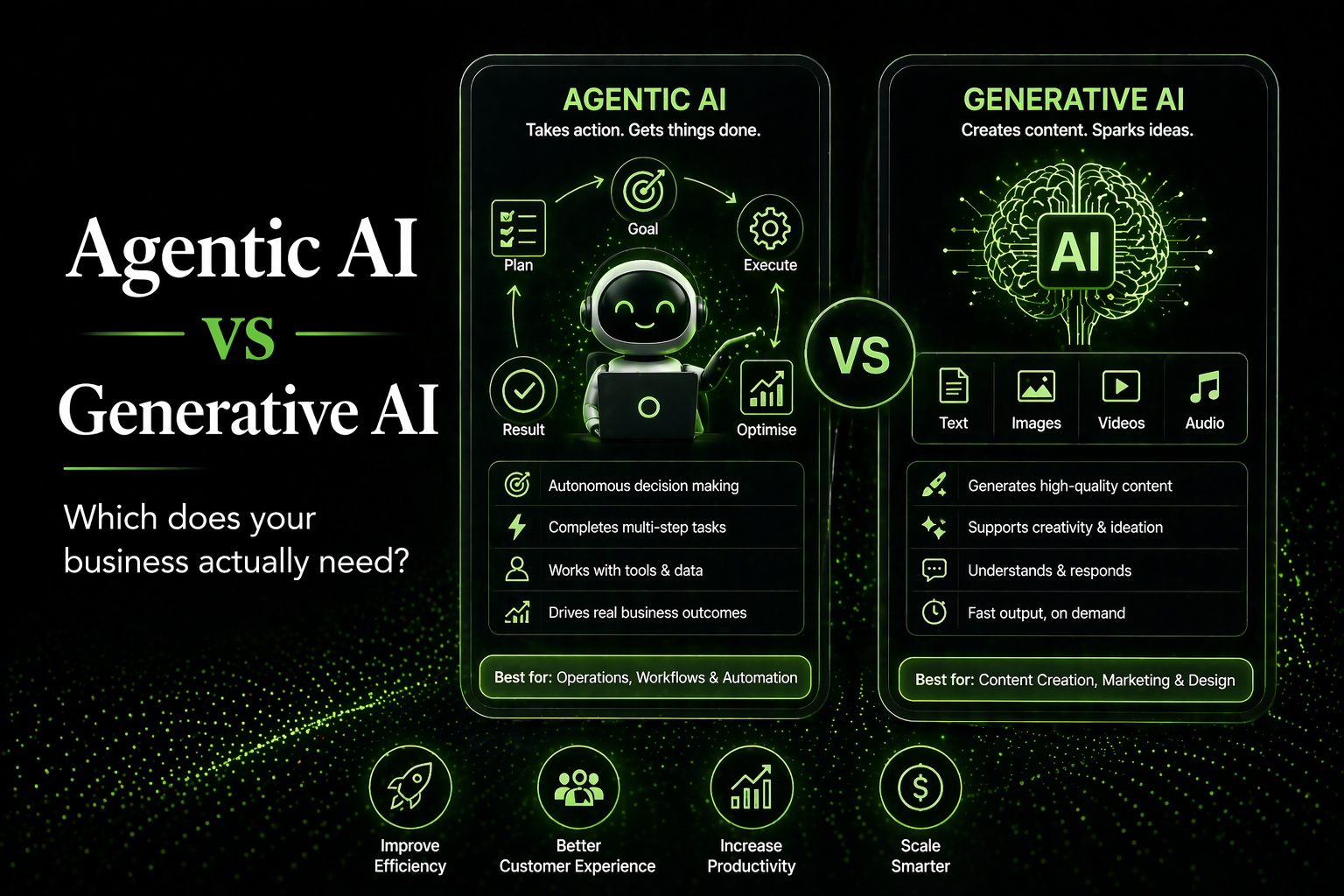
There are many different types of AI models. Some are built to classify or predict — determining whether an email is spam, for example, or forecasting demand. Others are generative — capable of producing new content like written text, images, code, or audio. For businesses interested in automating marketing and content production, it is the generative AI models that matter most.
What Is Generative AI Modelling?
Generative AI modelling is the process of building and training AI systems that can produce original content. It involves selecting the right foundation model, structuring your training data, fine-tuning the model on that data, and then deploying the result in a way that integrates with your existing tools and workflows.
The modelling process is what separates a custom AI system from a generic public tool. When a model is trained on your specific content — your brand guidelines, your tone of voice, your product catalogue, your customer communication history — it produces outputs that sound like your business rather than a generic internet average. This is the core value of generative AI modelling for commercial applications.
Foundation Models vs Custom-Trained AI Models
Foundation models like GPT-4, Claude and Gemini are pre-trained on enormous datasets and designed to handle a wide variety of tasks. They are powerful, but they are not tailored to any individual business. When you use ChatGPT to write marketing copy, you are using a foundation model without any customisation — and the output reflects that.
Custom-trained AI models are built on top of foundation models but fine-tuned using your own data. They learn your tone, your products, your audience, and your business context. The difference in output quality is significant, especially for high-volume, brand-sensitive content production.
How Businesses Use AI Models for Marketing Automation
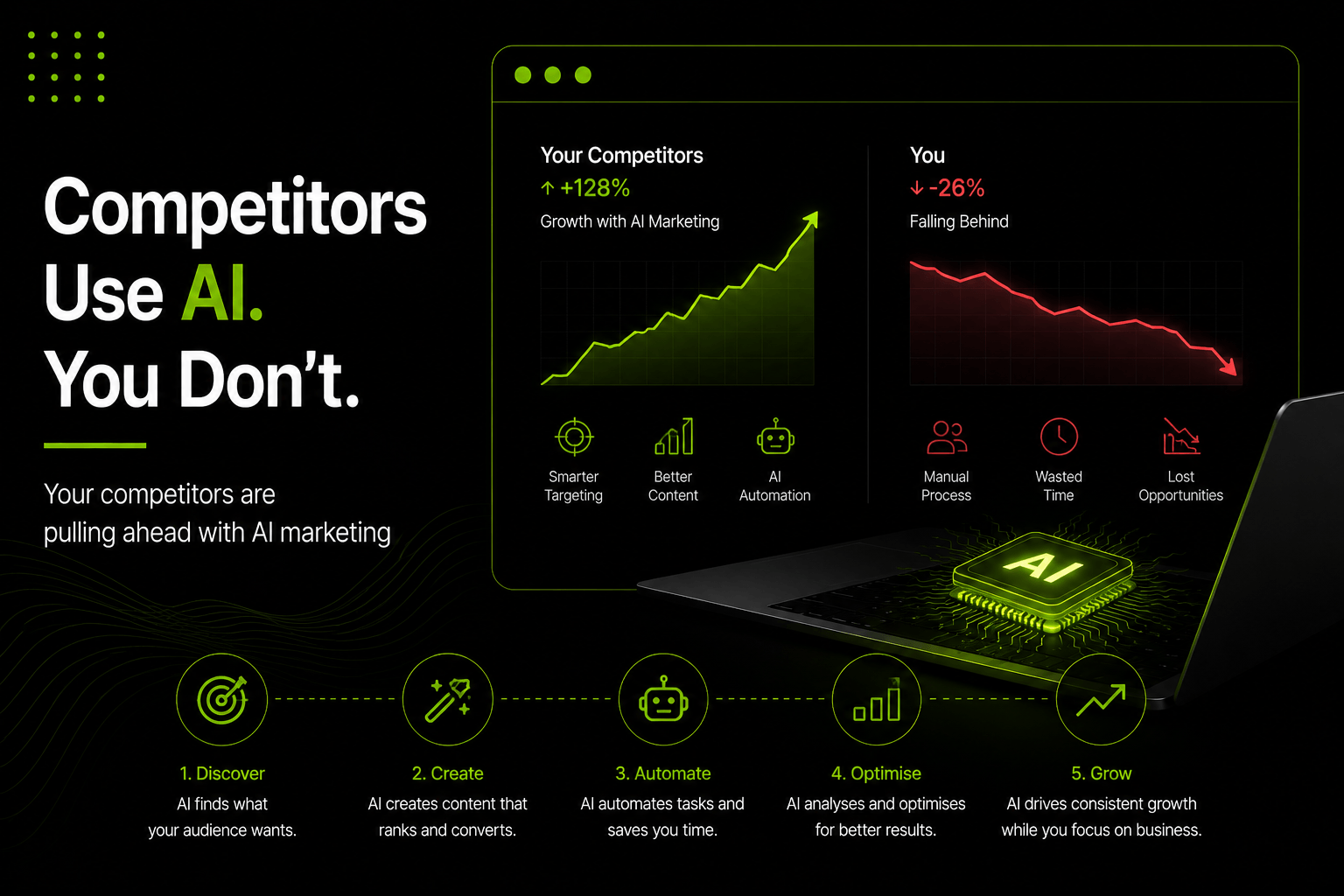
The most immediate application for most businesses is content production at scale. Marketing teams that previously spent days or weeks producing copy for campaigns, product pages, social media and email sequences can use custom AI models to produce that content in a fraction of the time — at consistent quality, in their brand voice.
Here are the most common marketing automation applications for AI models in Australian businesses today.
- Marketing copy — generating campaign headlines, body copy, landing page text and calls to action at scale
- Product descriptions — producing hundreds or thousands of consistent, SEO-friendly product descriptions for ecommerce catalogues
- Social media content — creating on-brand posts, captions and variations for different platforms and audiences
- Email sequences — drafting nurture sequences, onboarding emails and promotional campaigns
- Ad copy — generating and testing multiple ad variations efficiently
- Blog and article drafts — producing first drafts on specific topics for editorial review and publication
The key across all of these is that AI models handle the production volume, while your team handles the strategy, review and quality control. This is not about replacing creative thinking — it is about removing the bottleneck between good ideas and executed content.
AI Models for Visual Content Creation
Text is only part of the picture. AI models for image generation have reached a quality level where they are genuinely useful for commercial creative work. Businesses are using them to generate product visuals, social media graphics, background images, and brand assets — particularly for content that would previously require a designer or photographer for every variation.
The most effective approach combines AI-generated visual content with human creative direction. An AI model can produce dozens of image variations from a single brief in minutes. A designer then selects, refines, and applies brand standards to the best options. The result is faster creative production without sacrificing quality.
What Makes an AI Model Effective for Your Business?
The effectiveness of an AI model for marketing and content automation depends on three things: the quality of the training data, the clarity of the prompting and instruction framework, and the integration of the model into your actual production workflow.
A model trained on poor-quality or inconsistent content will produce poor-quality outputs. A model with no clear instruction framework will generate inconsistent results. And a model that sits outside your existing tools — requiring your team to copy and paste outputs manually — will quickly fall out of use. Good generative AI modelling addresses all three of these factors as part of the build process, not as afterthoughts.
How to Know If AI Models Are Right for Your Marketing Team?
The businesses that benefit most from AI models for marketing are those with high content volume requirements, a clearly defined brand voice, and workflows that currently involve significant repetitive production work. If your team spends meaningful time producing similar types of content repeatedly — product descriptions, social posts, email drafts, ad variations — an AI model will almost certainly save time and improve consistency.
The starting point is not a large investment. Many businesses begin with a focused proof of concept — a single AI model trained on one specific content type — and then expand once they have seen results. This approach reduces risk, builds internal confidence, and gives you real data on the value of the system before committing to a larger build.